

Most travel problems are not dramatic. They are small interruptions that happen repeatedly.
A cable disappears into the bottom of a bag. A toiletry bottle leaks. A passport is buried exactly when it is needed. Dirty clothes mix with clean ones. The personal item becomes impossible to search. Everything fit on the way out, but somehow not on the way home.
The point of a useful travel accessory is not to add more things to pack. It is to make the things you already need easier to carry, find, use, and repack.
Good travel organization should feel calm and forgiving rather than perfectly compressed. The best additions are the ones that solve a recurring inconvenience without creating a new system to manage.
Here are ten practical places to begin.
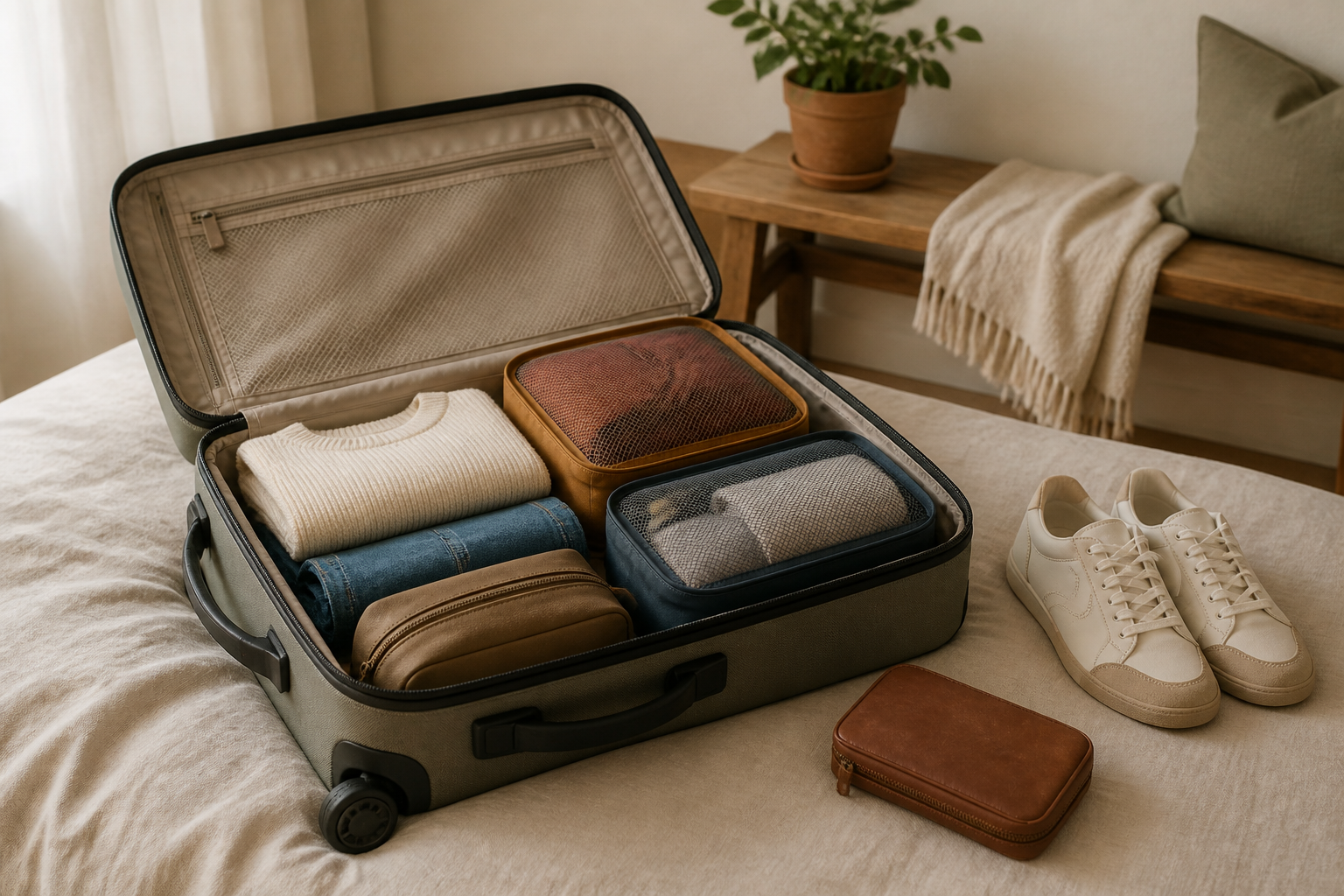
Keep the suitcase organized without overpacking
Suitcase organization is mostly a visibility and access problem, not a perfection problem. You should be able to tell where things are without turning the entire bag upside down.
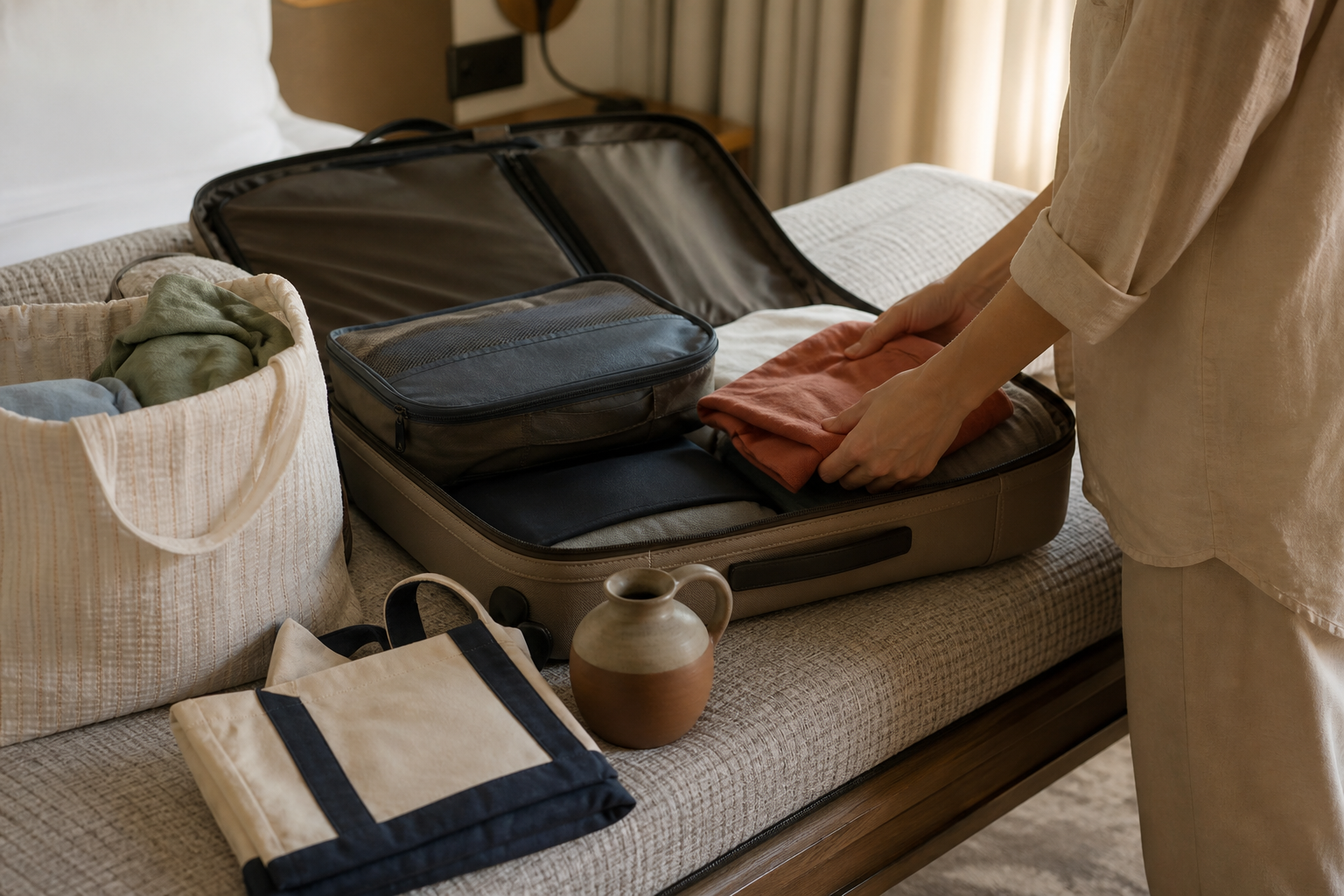
Packing cubes, compression cubes, and simple category grouping can all help. One cube might hold tops, another bottoms, and a smaller one underwear or sleepwear. The exact categories matter less than choosing a few that match the way you naturally pack.
Compression is useful when it gives a category a smaller footprint. It becomes less useful when it encourages you to pack more simply because the suitcase can physically hold it. Leave enough room to see, reach, and repack what you brought.
- keep frequently needed items near the top or in an easy-to-reach cube
- group smaller items so they do not disappear into clothing layers
- use compression only where it genuinely saves space
- keep categories broad enough that the system is easy to maintain
The goal is knowing where things are, reducing rummaging, and making unpacking easier—not making every inch of the suitcase count.
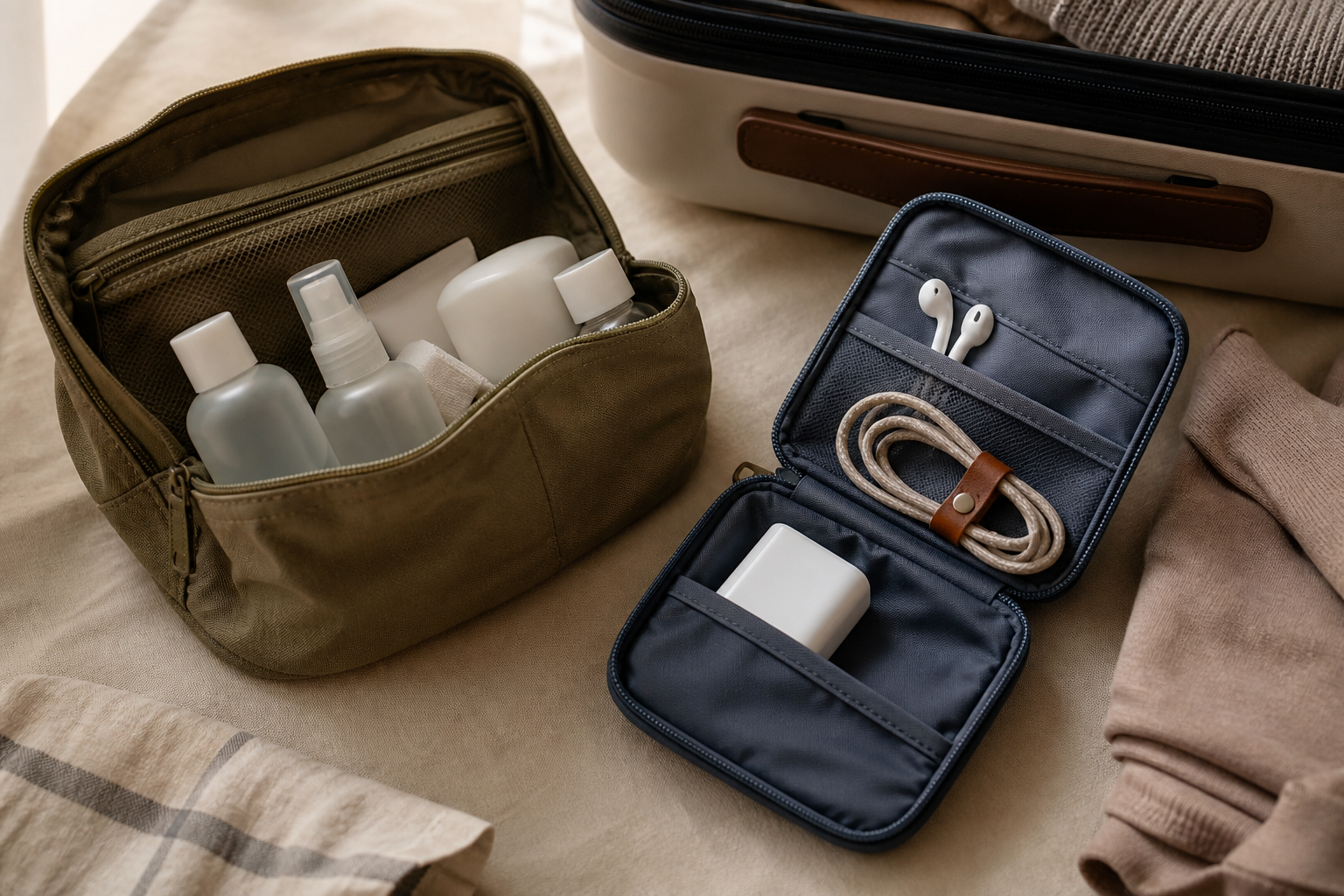
Stop toiletries from becoming a leak-and-spill problem
Toiletries are small enough to seem harmless and messy enough to disrupt an entire bag. A loose cap, a bottle squeezed by clothing, or one poorly contained liquid can make everything feel harder to use.
A toiletry bag with a few internal compartments can keep everyday items together, while a separate leak-resistant pouch can give liquids another layer of protection. Travel-size bottles may be useful where they suit the length of the trip, but the best container is the one that closes securely and is easy to identify.
Keep caps secure, separate liquids from dry items where practical, and place the things you use first somewhere you can reach without unpacking everything. Medications and other important health items should stay in an appropriate, accessible place and be handled according to the relevant travel or security requirements.
- check closures before packing
- separate liquids from dry toiletries when it helps
- use small internal compartments for items that otherwise wander
- keep the most-used essentials easy to reach
Give chargers, cables, and small tech one home
Small tech is especially easy to lose in transit because each piece is useful, portable, and rarely large enough to announce where it is hiding. A phone charger, laptop cable, earbuds, power bank, travel adapter, watch charger, or memory card can vanish into a pocket within seconds.
A compact tech pouch, divided cable organizer, zip pouch, or a few reusable wraps can give these items a shared home. You do not need a separate compartment for every cable. A simple arrangement that lets you see the main pieces is usually enough.
Choose a location and return small tech there after each use. Keep batteries and electronics packed in ways that follow the relevant carrier or safety guidance, and avoid adding adapters or hubs you are unlikely to use.
- group the chargers you actually travel with
- use simple wraps to keep cables from knotting
- keep adapters and small accessories visible
- return everything to the pouch after using it in transit
If small tech always returns to the same place, it becomes much easier to find when you are tired, moving quickly, or working from an unfamiliar room.
Keep the things you need in transit easy to reach
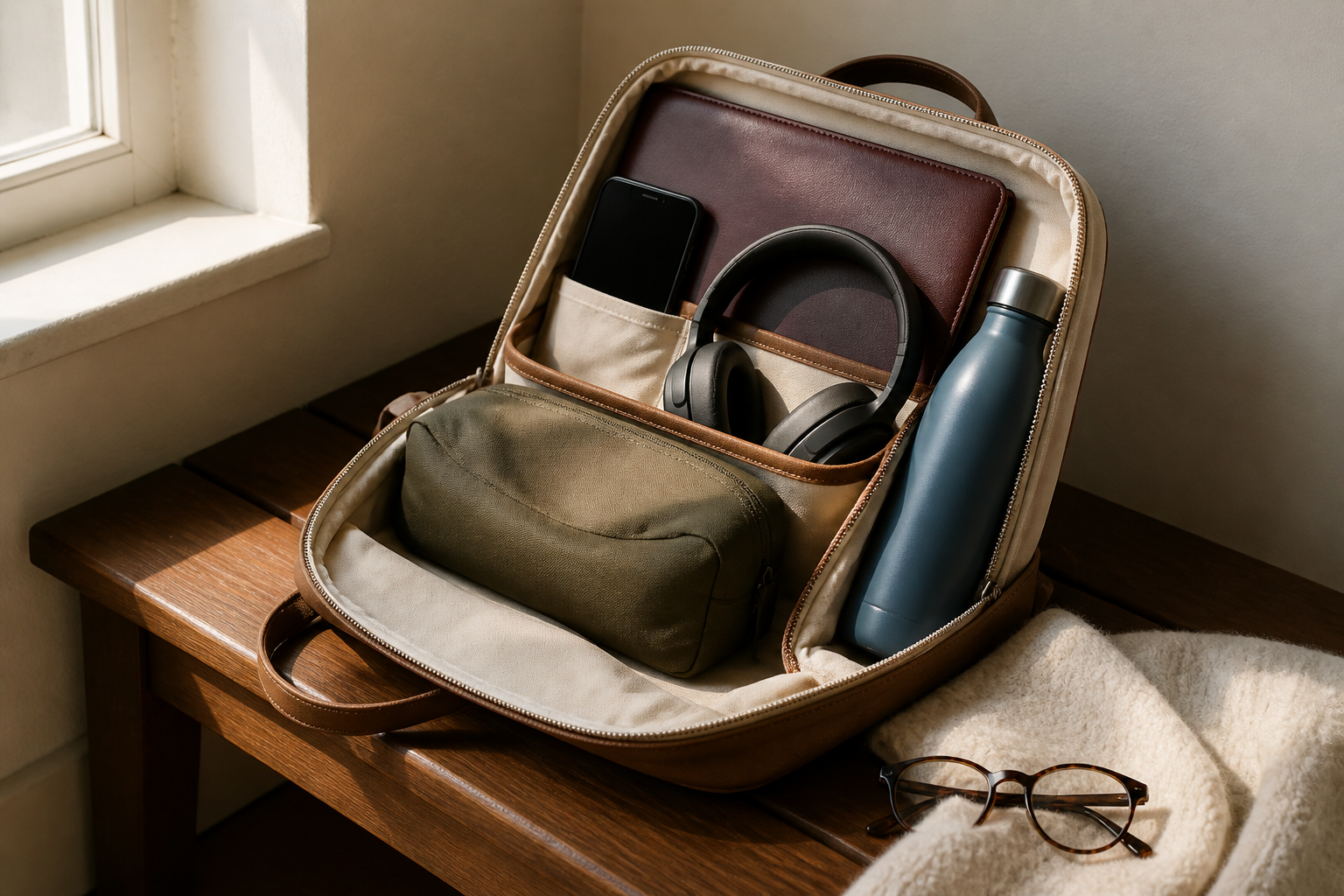
A passport, ID, wallet, phone, headphones, medication, pen, lip balm, tissues, hand sanitizer, or glasses may all be needed before the main bag is opened. The useful question is not what you can carry, but where each important item will live while you are moving.
A small crossbody, passport wallet, dedicated front pocket, or organized personal-item section can create a predictable location. Choose something that keeps essentials close without requiring valuables to be displayed openly.
The best setup leaves you able to reach what you need with one or two deliberate movements. If finding a boarding pass requires removing a sweater, a book, and three pouches, the system needs fewer categories, not more.
- choose one predictable place for travel documents
- keep high-use items in a front or top section
- separate quick-access essentials from backup items
- keep valuables secure and close rather than visibly exposed
Separate clean clothes from dirty laundry
The difference between clean and worn clothing becomes more noticeable as a trip continues. Without a separate place for laundry, the suitcase gradually becomes one large question mark.
A lightweight laundry bag, reusable zip pouch, foldable fabric bag, or dedicated cube can keep used clothes together. It does not need to create a perfect barrier. It simply makes it easier to see what is still clean and gives worn items somewhere to go.
Leave enough space for the bag to close without compressing everything into one dense block. A little separation can make repacking and unpacking feel much more manageable.
- choose a container that folds or packs away easily
- keep worn clothes together rather than scattering them
- use a dedicated cube if that is simpler than adding another bag
- leave room for the category to grow during the trip
Make long flights and drives more comfortable without carrying half the house
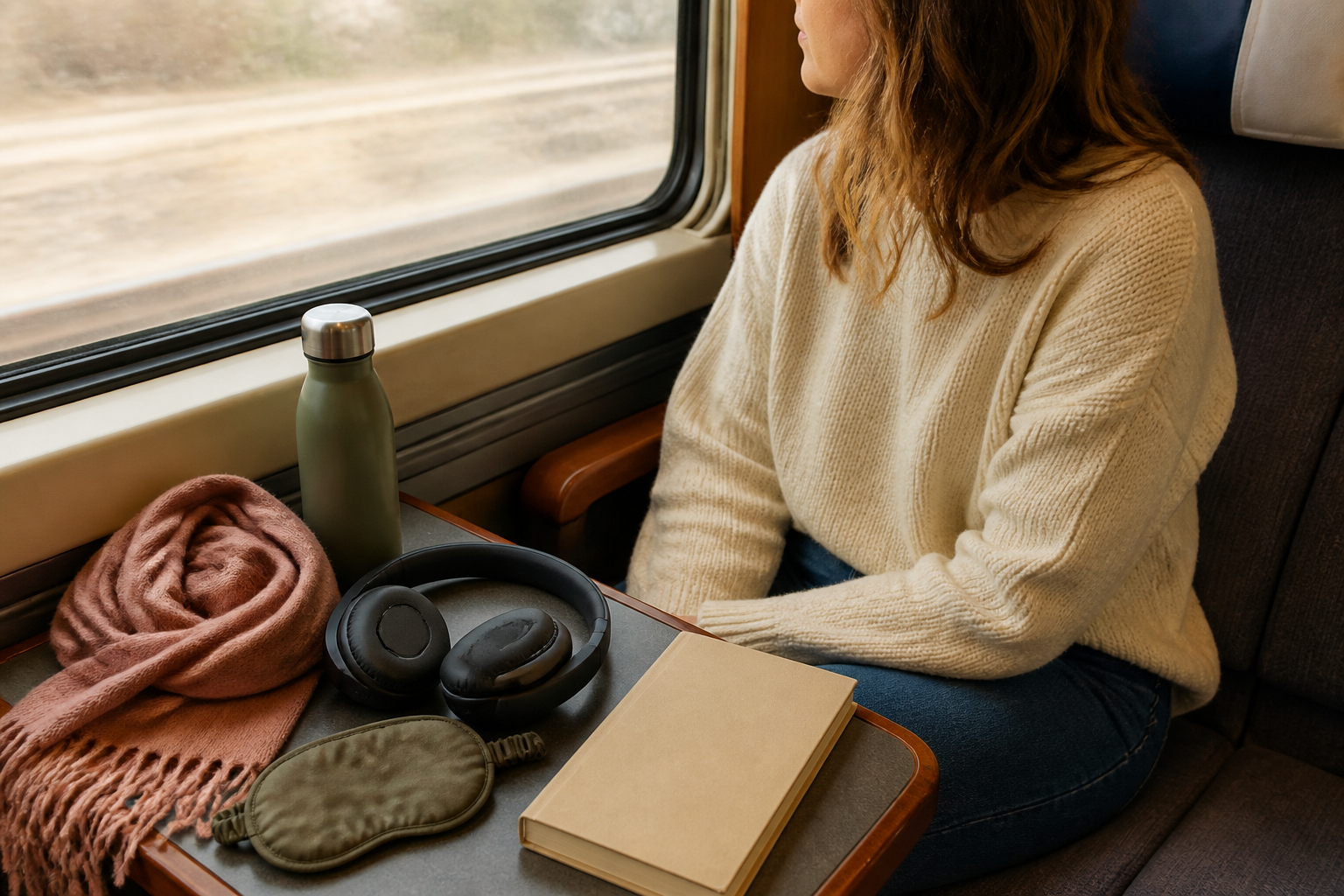
Travel comfort is personal, and the most useful item is usually the one you will actually use for more than a few minutes. An eye mask, headphones, a large scarf or lightweight wrap, a slim water bottle, or a small pouch of essentials may be enough.
A supportive travel pillow can earn its space when it genuinely helps you and fits the way you travel. Otherwise, a bulky accessory that only comes out once may be more burden than benefit.
Think in terms of compact comfort: things that are easy to reach, easy to carry, and useful across more than one part of the journey. Personal comfort is individual, so something useful for one traveler may be unnecessary for another.
- choose one or two comfort items with a clear purpose
- keep them in the personal item rather than buried in checked luggage
- favor soft, packable pieces that work in more than one setting
- leave behind bulky items you are unlikely to use
Make your phone easier to use while traveling
A phone becomes a map, confirmation folder, camera, notebook, translator, clock, and contact point while traveling. The small accessories around it should reduce friction rather than turn the setup into a second tech kit.
A small power bank, compact cable, simple phone grip, foldable stand, or protective case may be useful depending on the trip. Keep the cable that fits your phone with the power source, and give both a place in the tech pouch when they are not in use.
A few habits can help just as much as another accessory: download maps or travel information in advance where useful, charge the phone before a long transit period, and keep essential confirmations somewhere easy to access.
- keep a compatible charging cable with the power source
- choose a stand or grip only if it solves a real use case
- charge before leaving for a long transit period
- save important confirmations in an easy-to-find location
Stop digging through a giant personal item
A personal item can become a bottomless pit because it has to do too many jobs at once. Tech, documents, snacks, toiletries, reading material, comfort items, and a spare layer all compete for the same space.
A bag organizer insert can help, but it is not automatically the answer. A few small zip pouches or clear zones within the bag may be easier to maintain. One pouch for tech, one for toiletries, one for snacks or small comfort items, and one quick-access pocket for essentials is often plenty.
Try to create categories that match moments in the journey rather than every object you own. If an organizer adds more bulk than usefulness, skip it and use the bag’s natural pockets instead.
- create a small number of broad zones
- keep documents and quick-access items near the top
- group small loose items before they enter the bag
- leave some open capacity so the bag remains searchable
Bring water without adding unnecessary bulk
A reusable bottle can be useful on a trip, but the right type depends on what you value most. A slim rigid bottle may be easier to clean and simpler to use. A collapsible bottle may take up less room once empty. A lightweight bottle may be preferable when every extra ounce matters, while an insulated one may make sense when temperature retention is more important than packability.
Look at size, weight, capacity, cleaning, carrying loops, and how the bottle fits in your bag. A bottle that works beautifully at home but cannot stand upright, fit a side pocket, or pack down after use may not be the most useful travel choice.
Choose a form that suits the trip and follow the current local rules wherever you are traveling. The point is to carry a useful amount of water without turning the bottle into a permanent piece of luggage.
- compare weight and capacity before choosing a size
- consider how the bottle will be cleaned during the trip
- check whether it fits the bag you plan to carry
- choose rigidity or collapsibility based on how you will use it
Make the return trip easier
Return packing is often harder because the original arrangement has changed. There is dirty laundry, a few souvenirs, extra purchases, unpacked toiletries, worn shoes, and papers or receipts that were not in the suitcase at the start.
Leaving a little empty space when departing gives the return trip somewhere to go. A foldable extra bag can help when it earns its place, and a laundry bag or dedicated cube keeps worn clothes from taking over the clean categories. Reuse the same packing system rather than abandoning it as soon as the trip gets busy.
Protect breakable items with clothing where appropriate, keep travel documents separate from shopping receipts, and do a final room sweep before closing the luggage. The point is not to pack perfectly. It is to reduce the chaotic “how did all of this fit before?” moment.
- leave a little empty capacity on the way out
- keep dirty laundry contained
- pack a foldable extra bag only when it has a clear purpose
- separate documents from accumulated receipts and paper
- do one final room sweep before closing the suitcase
Pack for the moments that usually slow you down
The best travel accessories are not necessarily the most clever-looking, compact, viral, or highly specialized. They are the ones that solve problems you actually experience.
Before adding something to your travel kit, ask:
- What do I repeatedly lose while traveling?
- What always gets tangled?
- What takes too long to find?
- What leaks or spills?
- What becomes annoying halfway through the trip?
- What do I carry but rarely use?
- What would make the return trip easier?
- Which one or two changes would make the biggest difference?
Good travel organization should make the trip feel lighter, not give you more things to manage.