

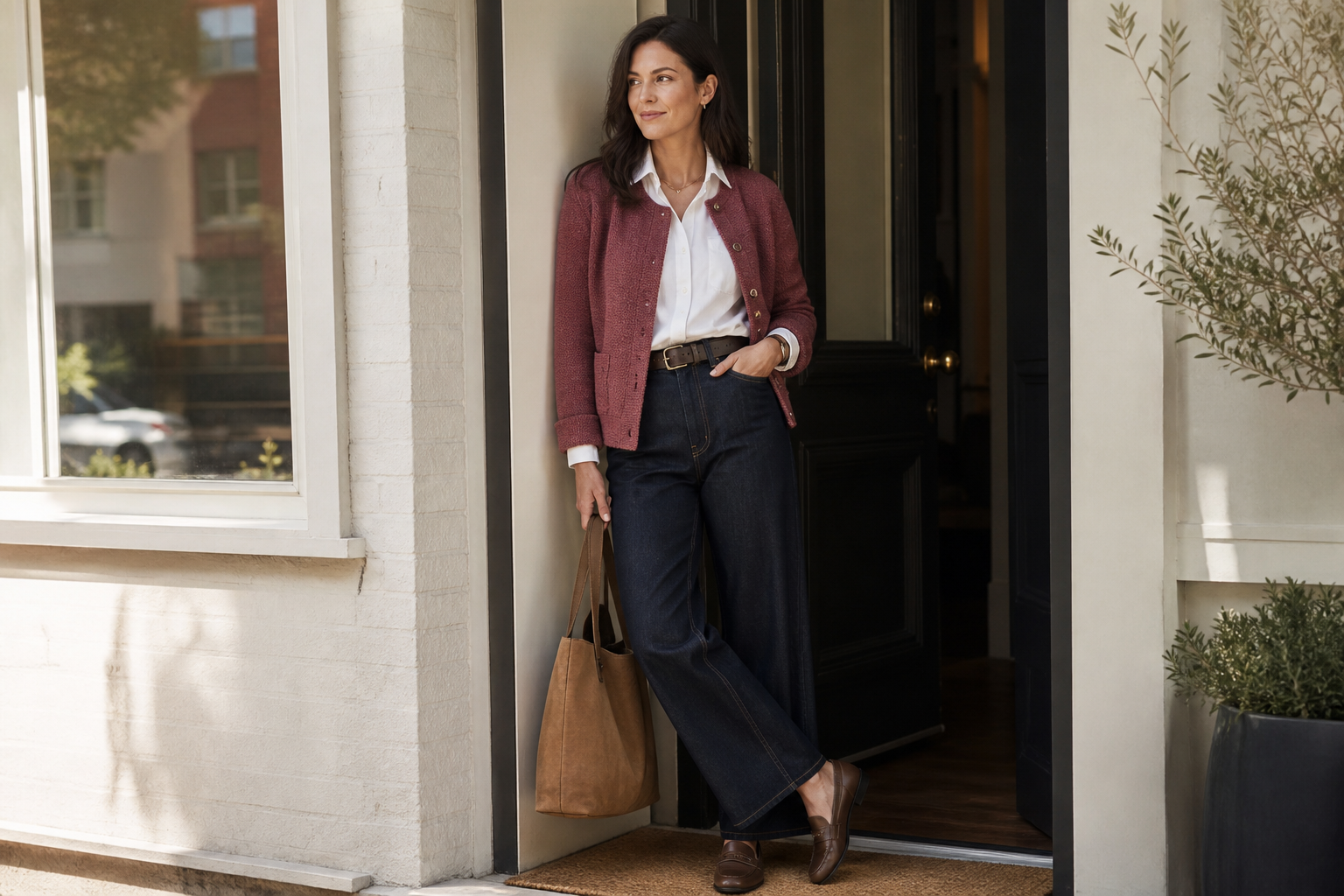
An outfit does not need to be expensive or complicated to feel put-together. Often, the difference between something you threw on and a simple outfit that feels intentional comes down to a handful of small details.
A sleeve length. The way trousers fall. A layer that gives the outfit structure. Shoes that work with the proportions. A bag that feels considered. One finishing accessory. Clothes that are steamed, de-pilled, or simply well cared for.
The goal is not perfection, formality, or following every trend. It is noticing the small details that can make clothes you already own work better together.
Polished does not have to mean expensive, formal, trendy, or dressed up. It can simply mean that the outfit feels intentional, comfortable, and like you.
Here are ten places to begin.
Start with fit — not trends
Fit is often the foundation of how even very simple clothing comes across. Notice sleeve length, trouser or jean length, shoulder placement, waist fit, shirt length, and where a jacket ends.
There is a difference between an item that is intentionally oversized and one that simply fits awkwardly. Fabric that pulls or bunches unnecessarily can distract from the rest of an outfit, while a simple piece that sits the way you want it to can feel considered without any extra styling.
Small adjustments may be enough: cuffing sleeves, tucking or half-tucking where it feels natural, choosing a different size or cut, adjusting trouser length, or making a simple tailoring change when it is worthwhile. An inexpensive piece that fits well can often feel more polished than an expensive piece that does not work well with the wearer.
Try a “third piece” when an outfit feels unfinished
A simple base outfit can sometimes feel more complete with one intentional layer. That might be a T-shirt with jeans and a blazer, a top with trousers and a cardigan, a simple dress with a lightweight jacket, or a T-shirt with pants and an overshirt.
The third piece does not have to be formal. A cardigan, vest, open button-down, lightweight coat, or relaxed jacket may add structure, texture, or another visual layer without changing the character of the outfit.
Not every outfit needs one. Think of it as an option for the days when the basics feel a little unfinished and one additional layer would make them easier to wear.
Pay attention to proportion, not just individual pieces
Sometimes an outfit feels off even when every individual item is good. The useful question is how the pieces relate to one another: where a cardigan or jacket ends, how much volume is happening at once, and whether a top feels better tucked, half-tucked, or left loose.
Wider trousers may feel different with different top lengths. An oversized top may feel more balanced with a streamlined bottom, while a fitted top may pair naturally with fuller trousers or a skirt. These are invitations to experiment visually, not rules about what anyone can or cannot wear.
Try one small change at a time. Changing the length, tuck, or layer can show you what makes the overall shape feel more balanced to you.
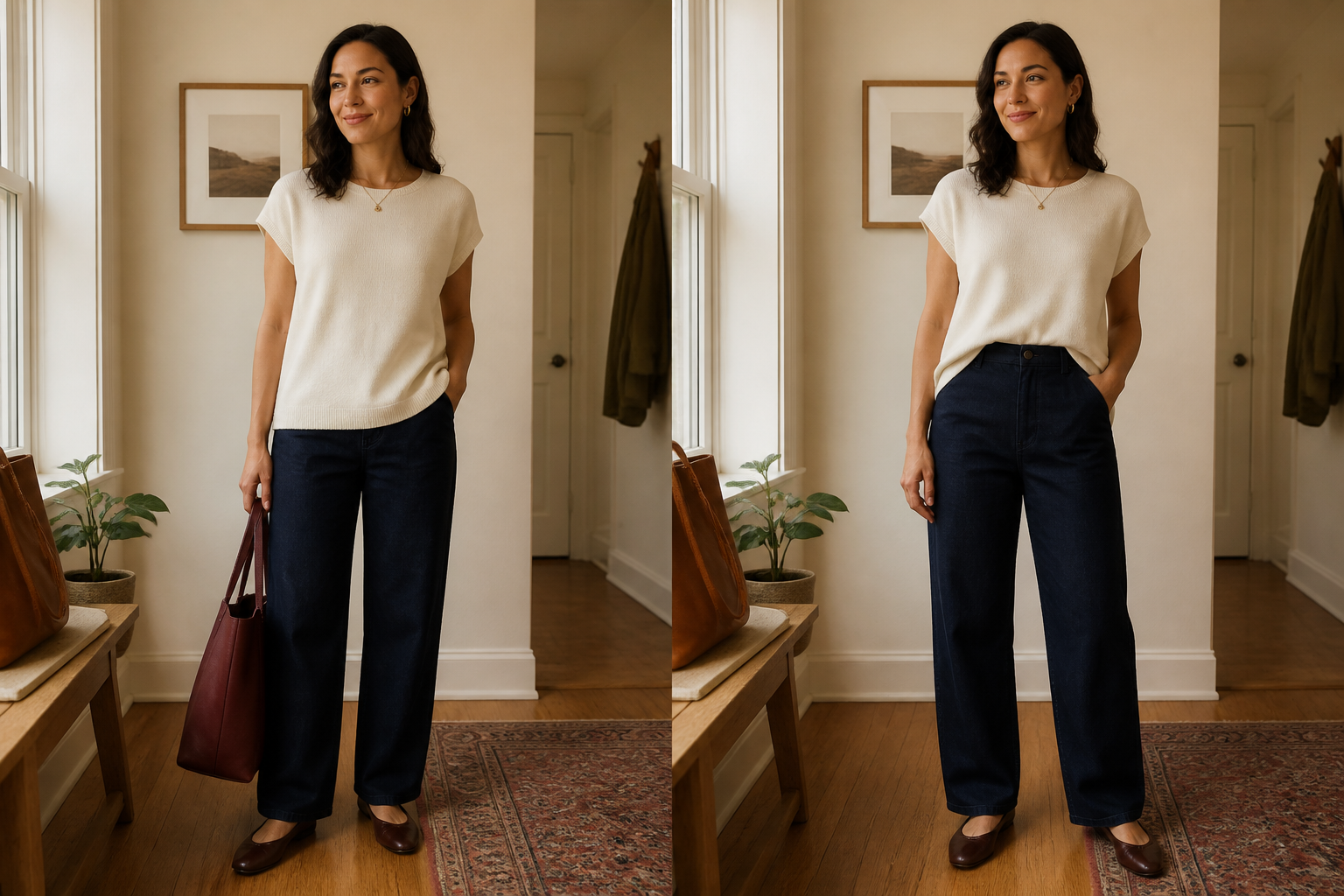
Shoes can change the entire message of an outfit
The same simple outfit can feel casual, relaxed, structured, classic, dressier, or sporty depending on the shoes. Clean sneakers, loafers, flats, boots, sandals, and low heels each bring a different level of ease and structure where preferred.
Condition matters as much as category. Clean shoes, intact laces, addressed scuffs, and polished or conditioned material where appropriate can make an outfit feel more cared for without requiring an expensive pair.
Think about how the shoes relate to the proportions and the setting. The most useful pair is often the one you can walk in, reach for regularly, and keep in good condition.
Use accessories as finishing details — not decoration overload
A belt, earrings, necklace, bracelet, watch, scarf, sunglasses, or hair accessory can give an outfit a small point of focus. Often, one intentional accessory is enough.
A belt can give definition to jeans, trousers, or a dress. Simple earrings can make a basic top feel finished. A scarf can bring color or pattern to familiar clothes, while a watch or bracelet can add a small structured detail.
The goal is not to wear everything at once. Try adding one element, then try removing it. The right finishing detail is the one that helps the outfit feel more like itself, not more decorated than you want it to be.
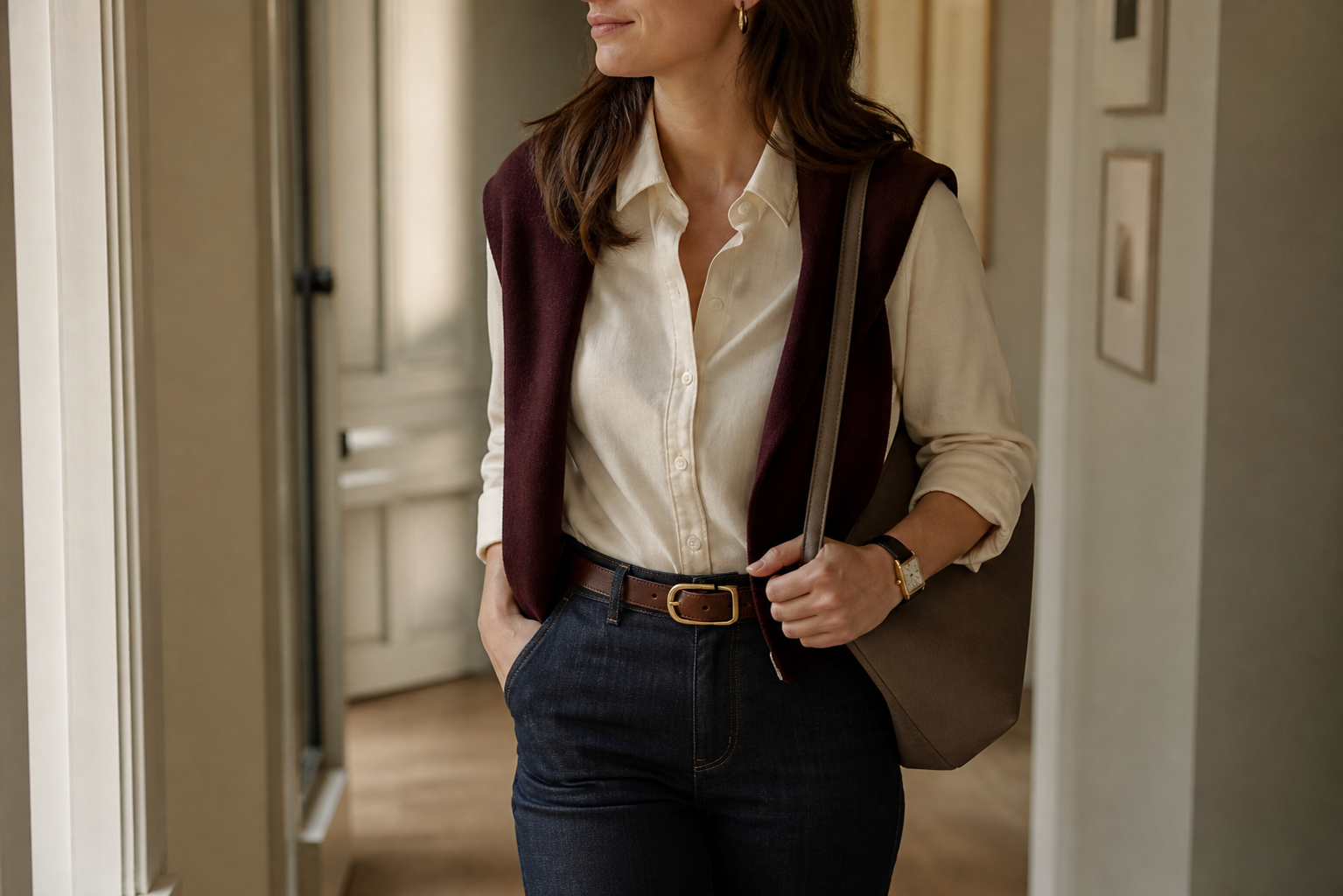
A bag can make basics feel more intentional
A bag has a strong visual effect because it contributes shape, scale, color, and material to an outfit. Notice whether you prefer something soft or structured, compact or roomy, short-strapped or crossbody, and whether it works practically for what you carry.
Shape, proportion, material appearance, construction, and condition can matter more to the overall effect than the name printed on a label. A well-kept everyday bag with a useful size can feel more considered than a more expensive one that does not suit the outfit or the day.
Look for the relationship between the bag and the rest of the outfit. A little structure can sharpen simple basics, while a relaxed fabric bag may support a softer, more casual combination.
Use color to create connection — not perfect matching
An outfit does not need every element to match. A few quiet connections are often enough to make the whole combination feel cohesive.
You might repeat one color in two places, use a mostly neutral base with one accent, pick up a color from a print, wear tonal variations from one color family, or use the shoes, bag, or accessories to create a subtle link.
If an outfit feels visually busy, limiting competing colors may help. If it feels flat, one small accent can give it a little life. Treat color as something to notice and play with, not a system of rules about what you are allowed to wear.
Use layers to make clothes you already own feel different
Layering can change proportion, texture, color balance, and level of formality without requiring an entirely new outfit. Try a T-shirt under a blazer, a button-down worn open over a tank, a cardigan over a dress, a lightweight sweater over the shoulders, or a shirt under knitwear where it feels practical.
The most successful combinations usually make sense for the weather, the setting, and the way you move through the day. A layer should add useful flexibility rather than make the outfit feel carefully arranged and difficult to wear.
Start with familiar pieces. Changing which item sits over or under another can make the same clothes feel fresh while keeping the overall style grounded.
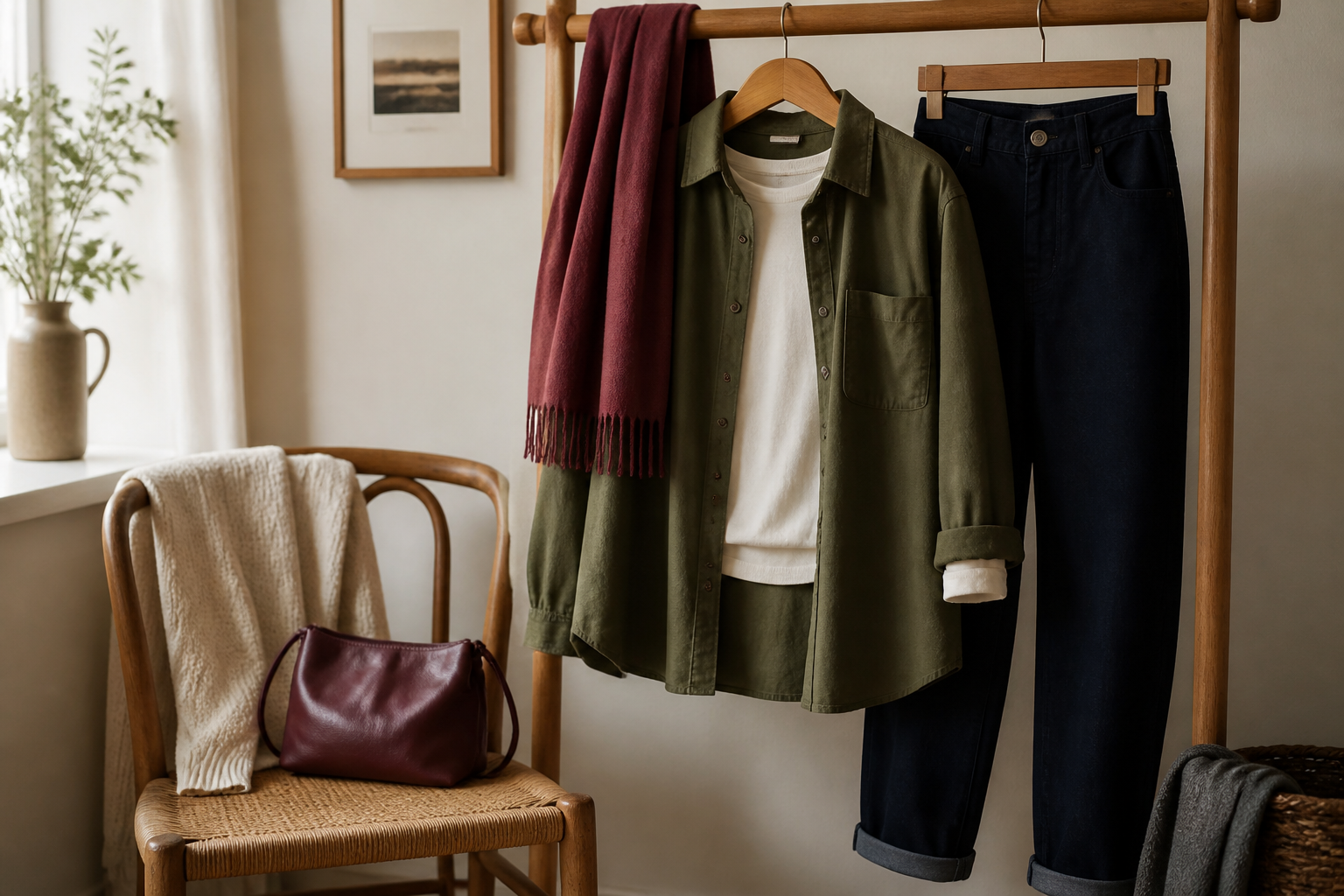
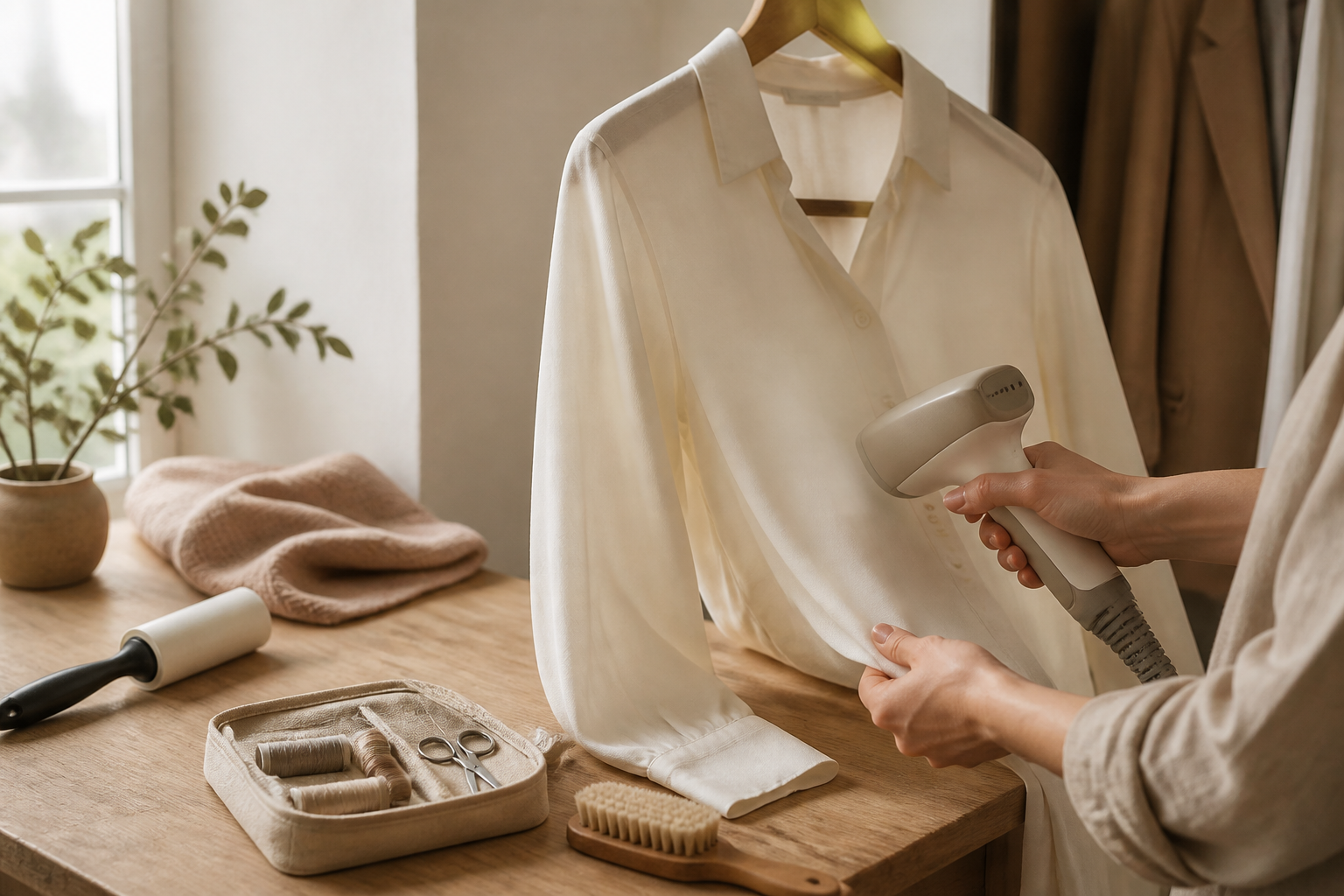
Sometimes the upgrade is maintenance — not another purchase
Garment condition has a quiet influence on the overall impression of an outfit. Wrinkles, lint, pet hair, pilling, loose threads, missing or loose buttons, and scuffed shoes can make familiar pieces feel less ready to wear.
Before buying something new, look at what is already in the closet. A garment steamer, lint roller or reusable lint remover, fabric shaver, basic shoe-care supplies, or small sewing kit may help restore useful pieces to rotation.
Use care tools according to the instructions for the garment or material. The point is not to make every item look untouched. It is to keep the clothes you enjoy wearing in a condition that feels cared for.
Build a simple finishing formula that works for you
A simple mental formula can make getting dressed easier without turning style into a rigid uniform. You might try a simple base plus an intentional layer, good shoes, and one finishing accessory.
Other combinations could be a dress with a defined waist if desired, simple jewelry, and a bag; or trousers with a simple top, a third piece, and intentional shoes.
These are examples, not rules. Notice which combinations consistently make you feel comfortable and put-together. Over time, a repeatable approach can reflect your own style while making ordinary mornings a little easier.
Polished doesn’t have to mean dressed up
Polished does not have to mean expensive, designer, trendy, formal, uncomfortable, perfectly coordinated, or tied to a certain body type. It does not have to mean constantly buying something new.
It can simply mean intentional, cared for, comfortable, coordinated, and reflective of the person wearing it. Before you head out, ask:
- Does this outfit fit the way I want it to?
- Do the proportions feel balanced to me?
- Would one layer make it feel more complete?
- Are the shoes working with the outfit?
- Would one accessory be enough?
- Are the clothes in good condition?
- Am I trying to fix something with a purchase that could be fixed another way?
- Does this still feel like me?
The most polished outfit is not necessarily the one with the most expensive pieces.
Often, it is simply the one where the details feel considered — and the person wearing it still feels like themselves.