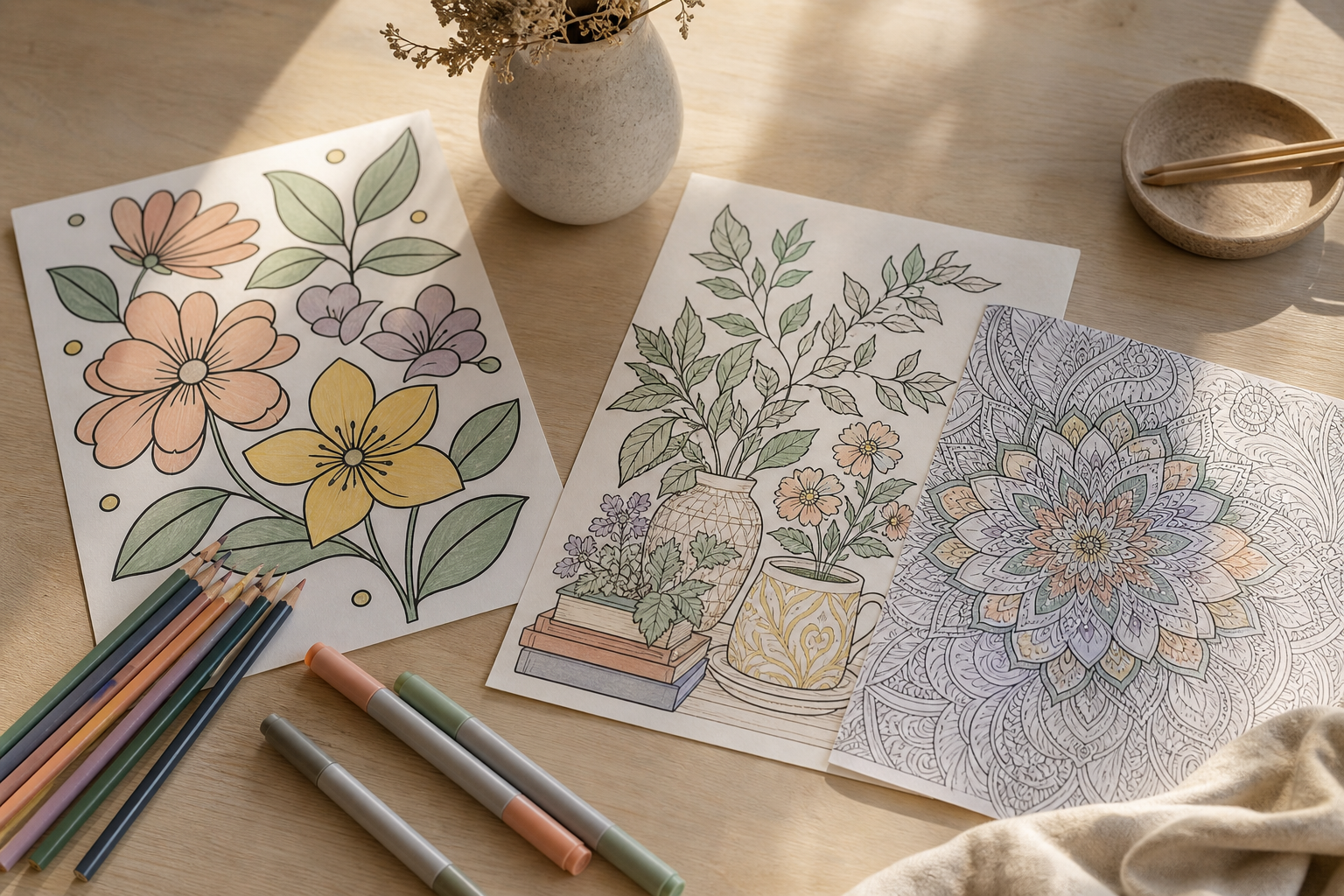
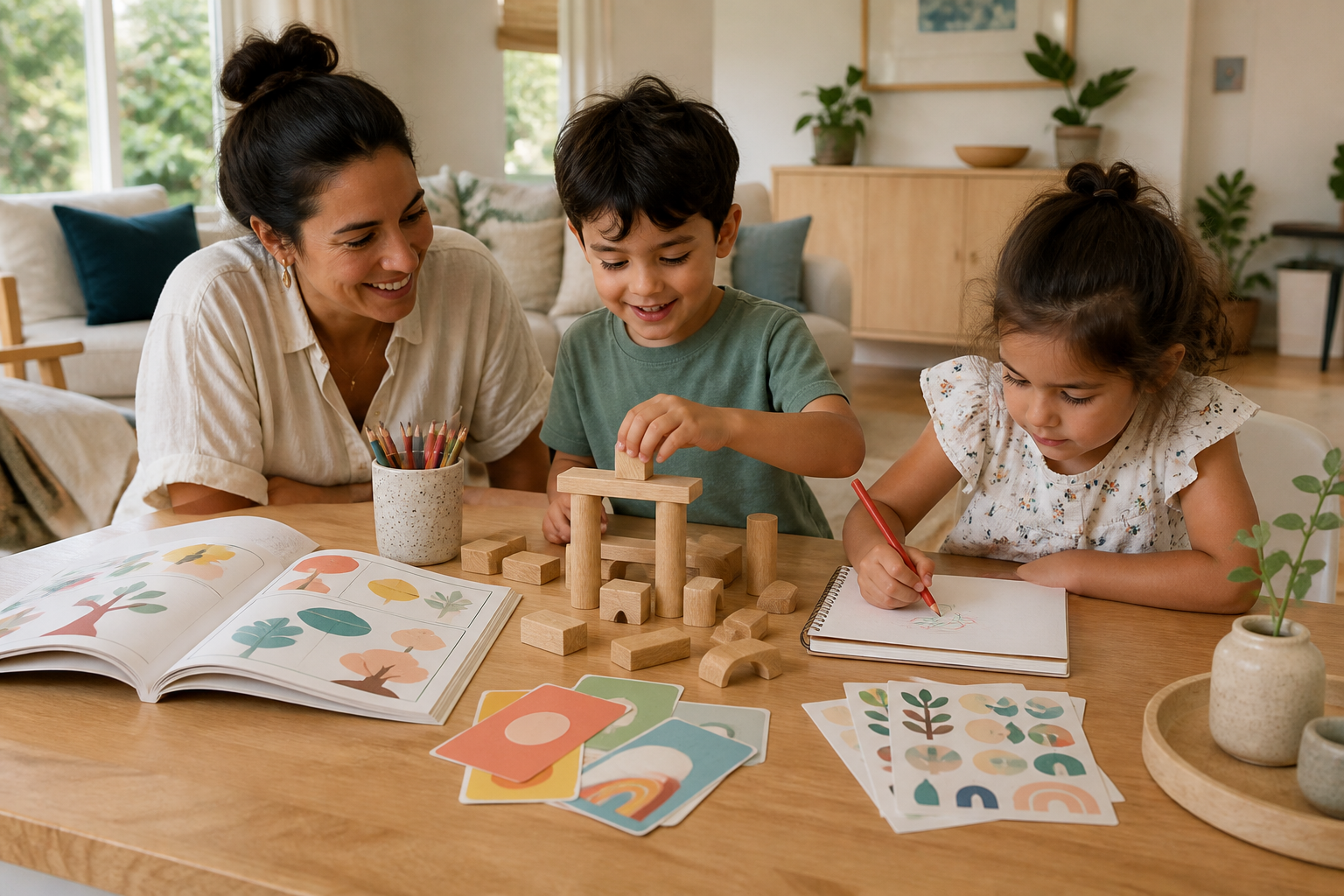
Some children’s activities sound wonderful until you see what the adult has to do first. Print the template. Find the glue. Cut the pieces. Gather six supplies. Cover the table. Explain twelve steps.
By the time everything is ready, the child may already have lost interest. Screen-free time does not need to become another project for the parent.
Often, what works best is something with a very low barrier to starting: an activity book already waiting on the shelf, a challenge that gives familiar toys a new purpose, a drawing prompt, a scavenger hunt you can invent in thirty seconds, or a small activity pouch you can grab on the way out the door.
The goal is not to eliminate screens. It is simply to have a few genuinely good alternatives ready when you want them.
Try an activity book that gives kids a story to follow
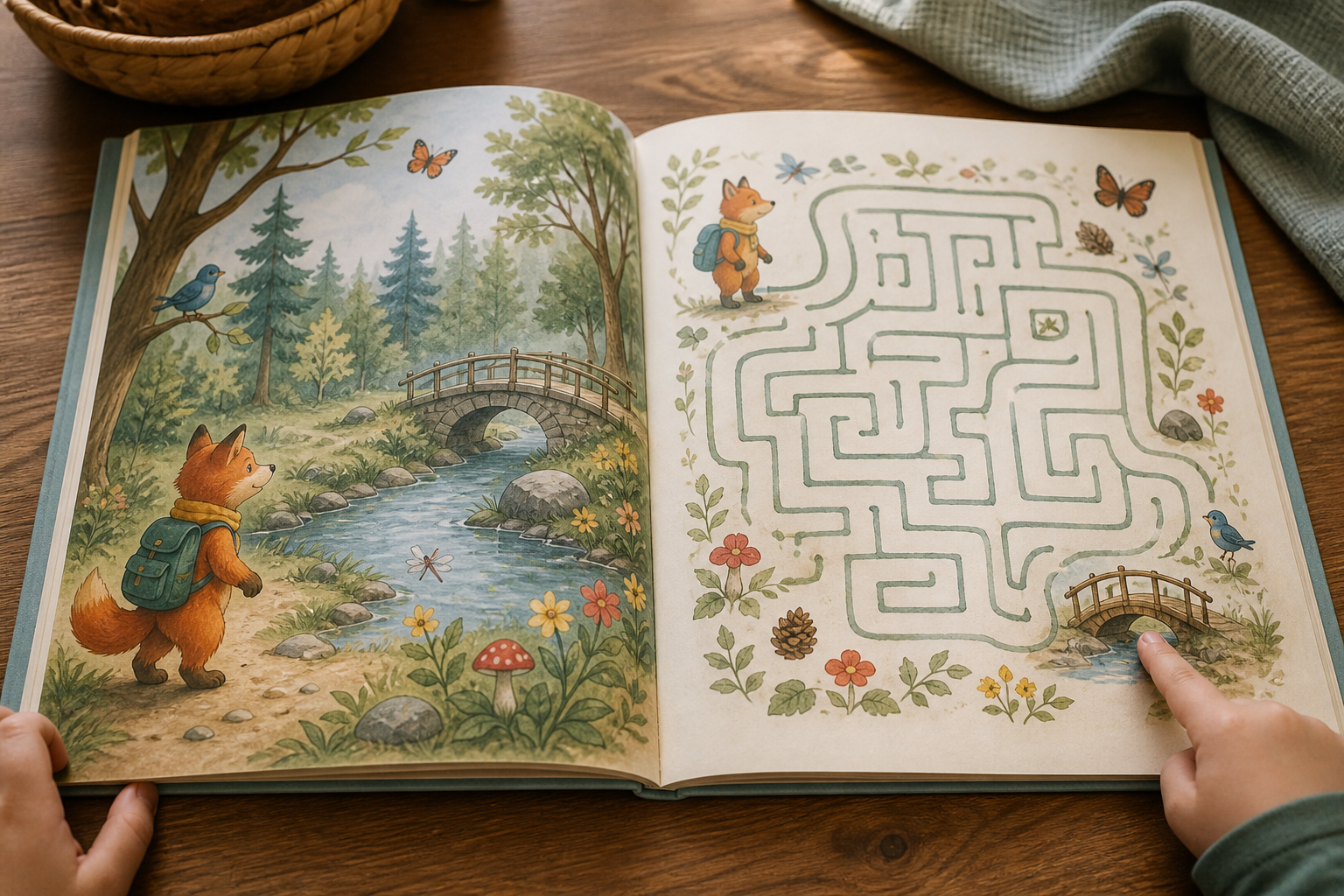
Many activity books contain independent mazes, coloring pages, matching games, tracing, spot-the-difference pages, or hidden-object activities. Those can be enjoyable on their own.
Another format connects the activities through a simple story, recurring character, small adventure, problem to solve, or destination. A character might need to cross a bridge, find something hidden, or prepare for the next part of the journey. The child completes a maze, coloring page, or matching activity as part of that moment.
For some children, continuity gives separate activities a reason to feel connected. Wanting to know what happens next can be enough to make another page appealing. It is not universally better than a book of independent activities; it is simply another format to look for when a child enjoys stories and needs a clear next step.
- look for a recurring character or simple destination
- notice whether the activities connect to the story without requiring extra explanation
- choose a level of detail that feels appropriate for the child
- use the book as an easy starting point rather than a lesson plan
Keep a few “10-minute rescue” activities around
Sometimes the need is very specific: you need something for the next ten minutes. Maybe dinner is not ready, a sibling is still finishing, an adult needs to make a phone call, or everyone is tired and a long project is the last thing anyone wants.
A rescue activity should have a clear beginning and a clear end. One maze, one dot-to-dot, one hidden picture, one coloring page, one mini puzzle, or one drawing challenge gives the child a finite task without requiring the adult to launch an elaborate project.
Keep a few choices in a drawer, basket, or small folder. The point is not to fill every spare minute. It is to have something easy to reach for when a short gap appears unexpectedly.
- one maze or dot-to-dot
- one hidden-picture page
- one coloring page
- one mini puzzle
- one drawing challenge with a clear finish
Turn a surprise challenge into a “mystery mission”
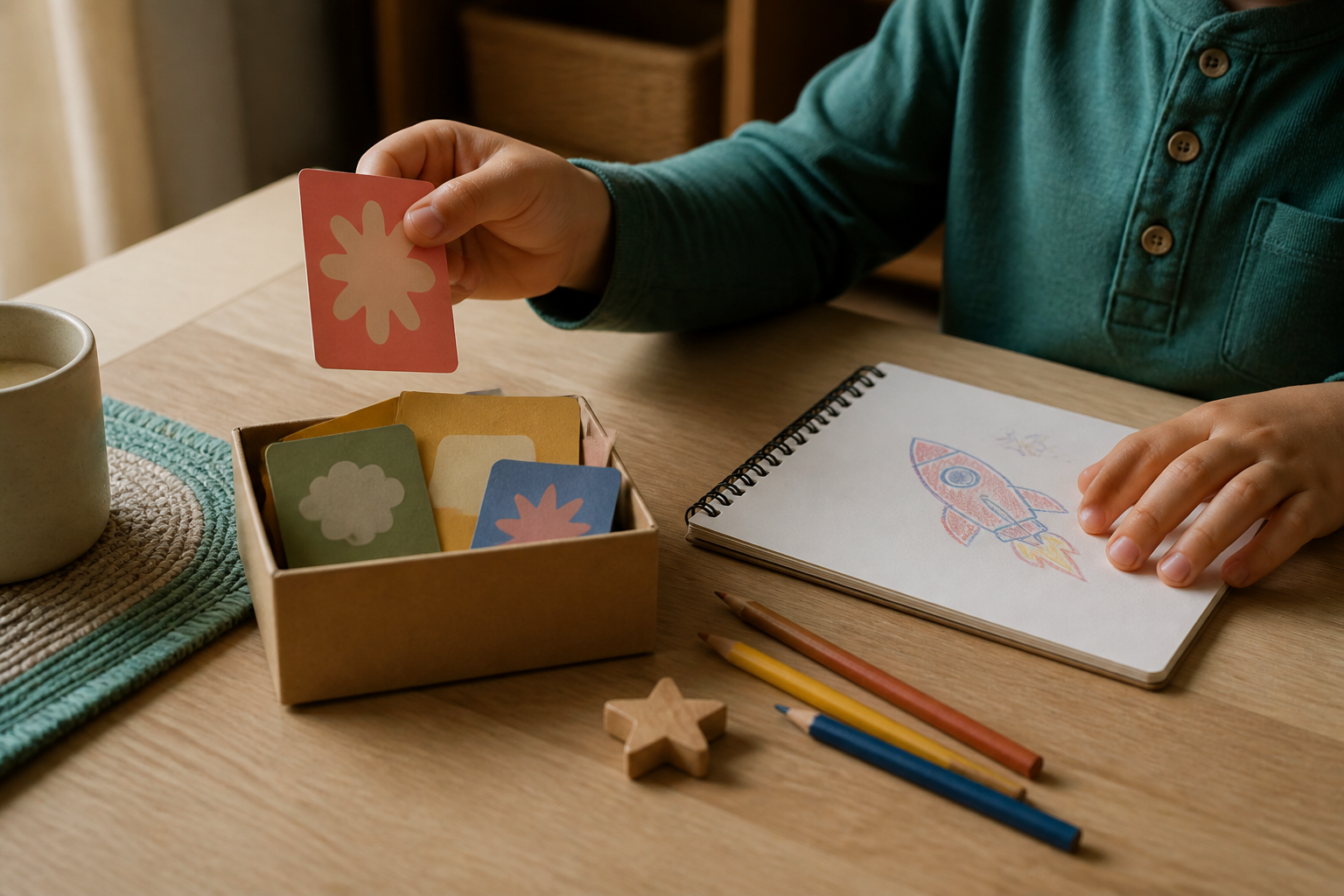
Create a small collection of surprise missions on index cards, slips of paper, or reusable cards kept in a jar or small box. The child chooses one without knowing what it will be, so the surprise becomes part of the activity.
A mission might say: “Build a bed for your favorite toy.” “Draw an animal nobody has ever discovered.” “Find five things softer than your shoe.” “Make something that can stand taller than this cup.” Or “Create a home for a tiny imaginary creature.”
Parents can write the missions themselves for almost no cost, changing them as interests shift. A prepared challenge-card set could make the system easier later, but the useful idea is the repeatable format—not a particular product.
- keep the prompts short enough to understand quickly
- mix building, drawing, finding, and pretend-play challenges
- let the child choose the card when possible
- refresh a few prompts when the collection starts to feel familiar
Give their existing toys a mission
A child can have plenty of toys available and still say, “I don’t know what to play.” Sometimes the missing ingredient is not another toy. It is a purpose.
Try “Build a bridge strong enough for this car,” “Make a shelter for this stuffed animal,” “Create a zoo for five animals,” “Build the tallest tower you can using only twelve pieces,” or “Make a house that has a secret room.” Blocks, magnetic-style building pieces, toy animals, dolls, cars, cardboard, and recycled boxes can all become useful materials.
A mission changes the question from “What should I do?” to “What could I make for this?” Familiar materials may feel different when they have a small problem to solve. Use sensible supervision around small pieces and choose materials that fit the child and the setting.
- give the materials a job before adding anything new
- make the challenge specific enough to begin
- set a limit such as twelve pieces or one small building area
- let the child decide how the solution should work
Use a scavenger-hunt formula you can invent anywhere
Instead of keeping one fixed scavenger-hunt list, use a formula you can rebuild in a few seconds. Ask the child to find something of a certain color, texture, letter, shape, size, sound, natural origin, or purpose.
For example: find something blue, something soft, something smaller than your hand, something beginning with B, and something that makes a sound. Change the categories each time so the same walk, room, hotel, backyard, park, or grandparents’ house can offer a different challenge.
Keep the child within the area you can reasonably supervise, especially outdoors or in unfamiliar places. The flexibility is what makes the formula useful: it does not require a special card set or a carefully prepared route.
- color
- texture
- letter or sound
- shape or size
- nature or purpose
Play “Finish this…” when a blank page feels too blank
Some children enjoy drawing once they have an idea but do not know what to do with a completely blank page. Instead of saying “Draw something,” give them a starting mark.
Draw a circle, squiggle, triangle, pair of eyes, strange shape, three random lines, or half of an object. Then ask, “What could this become?” A circle might become a planet, animal face, balloon, strange machine, or imaginary fruit. A squiggle could become a dragon, road, creature, or landscape.
Parents and children can take turns starting drawings for each other. It is a small change, but it turns the first decision into something already done and makes a blank page easier to enter.
- start with a shape rather than a finished picture
- take turns adding the first mark
- accept unusual answers instead of correcting the idea
- use a small drawing pad when a full page feels too demanding
Keep one grab-and-go activity pouch
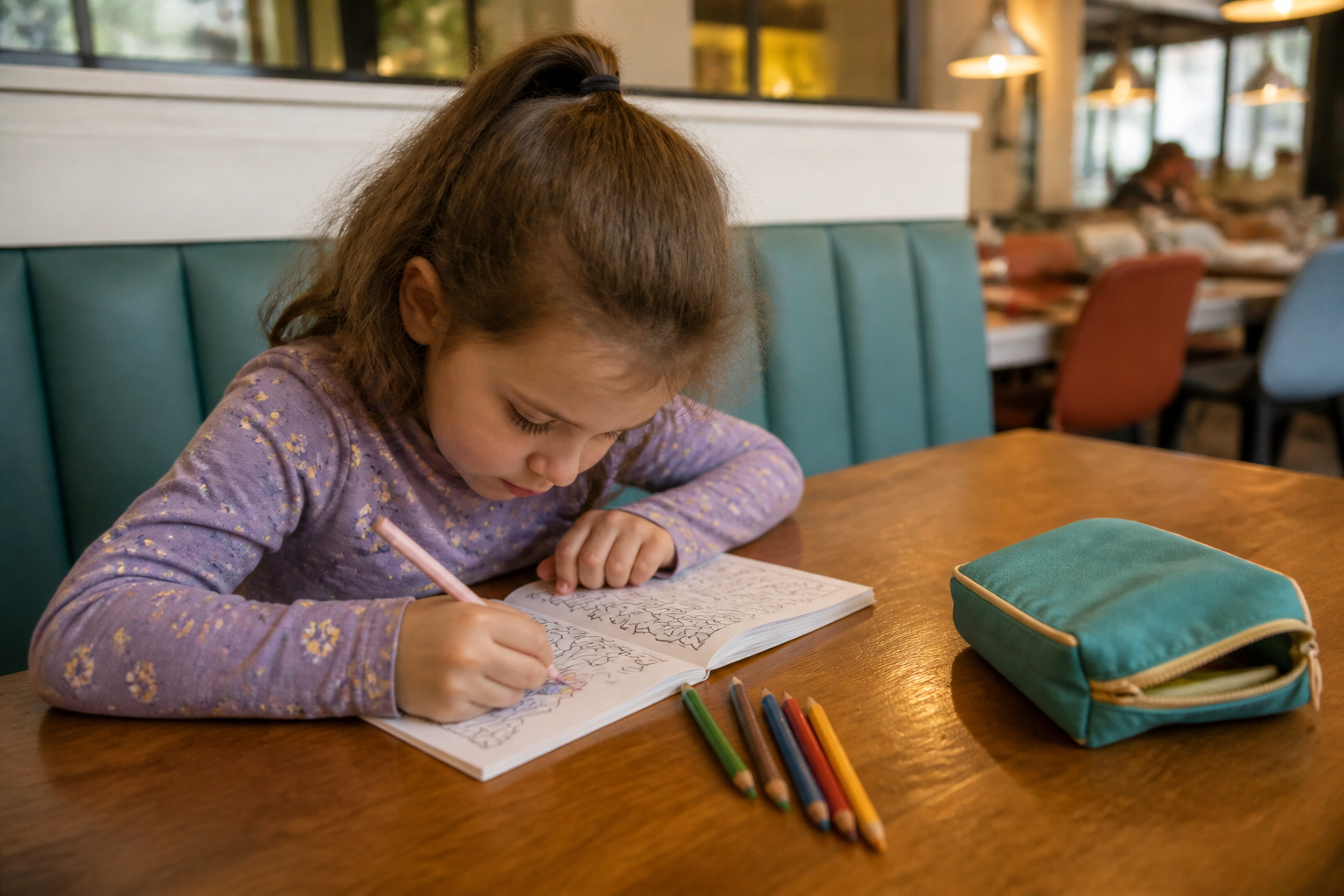
Instead of packing a giant entertainment bag every time the family leaves home, keep one small activity pouch ready. A compact pouch can work for restaurants, waiting rooms, appointments, travel, visiting relatives, sibling activities, or unexpected waiting.
Possible contents include a small activity book, four to six colored pencils or crayons, reusable stickers, a few blank index cards, a mini drawing pad, and one compact puzzle or activity. A few reliable options are enough. You can change one or two contents if the child loses interest without rebuilding the whole pouch.
The pouch should be easy for the adult to grab and easy for the child to understand. It does not need to carry every possible activity, and it should not depend on a screen to feel complete.
- one small activity book
- four to six coloring tools
- blank cards or a mini drawing pad
- one compact puzzle or reusable activity
- a small pouch that is easy to find and carry
Play the “Choose three” story game
Choose three unrelated things and create a story containing all of them. Try dragon, sandwich, and bicycle—or cat, moon, and umbrella. A robot, cookie, and castle can become a different story every time.
Younger children can tell the story aloud. Other children might draw it, write it, act it out, or take turns adding sentences. Parents can choose the three things, children can choose them, or everyone can pick three random objects from the room.
The game needs no special supplies and can work at home, in a waiting room, or while traveling. It can be a two-person activity or something the whole family adds to one sentence at a time.
- choose three unrelated objects or ideas
- let the child tell, draw, write, or act the story
- take turns adding one sentence
- use random objects when everyone needs a quick starting point
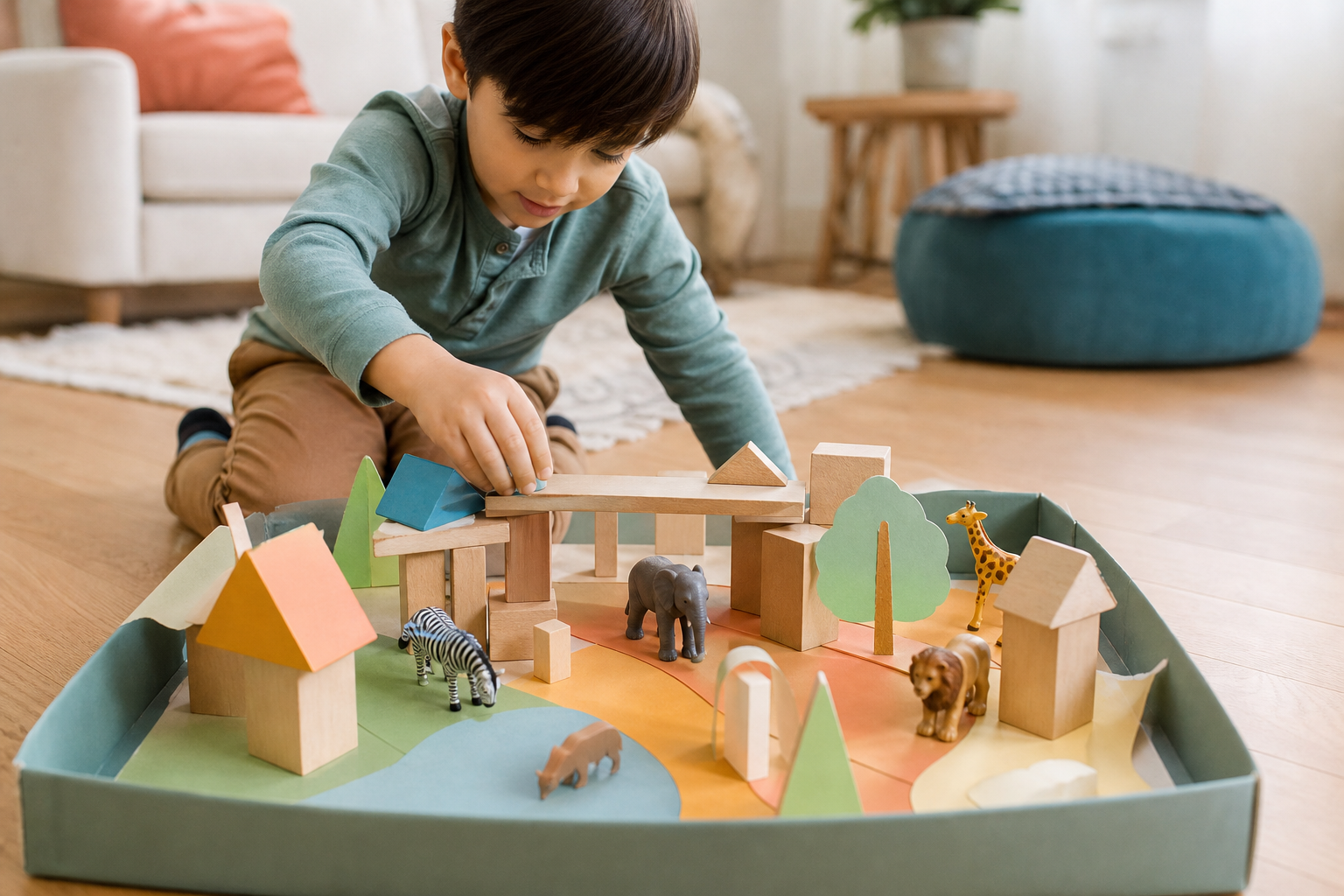
Build a mini world in a small space
Open-ended play can feel easier when it has a boundary. Give the child a shoebox lid, tray, small section of a table, or piece of cardboard and ask them to create a tiny world inside it.
The world could be an animal village, fairy garden, dinosaur island, tiny city, campsite, farm, space station, underwater world, or imaginary planet. Blocks, toy animals, paper, pebbles, leaves, recycled packaging, and small figures can all contribute without requiring an elaborate craft setup.
The limited space is part of the challenge. It gives the child a clear place to begin and a natural reason to make choices about what belongs in the world. Use materials that are appropriate for the child and supervise small pieces when needed.
- choose one small building area
- name the kind of world or let the child invent it
- use familiar materials before gathering new supplies
- ask what the people, animals, or objects in the world need
The best activity is the one you can actually start
Screen-free activities do not need elaborate preparation, expensive kits, perfect craft results, huge supply lists, or constant adult direction.
Sometimes a child simply needs a character to follow, a small problem to solve, a surprising prompt, a starting line on a blank page, a mission for toys they already own, or a few choices when they cannot think of what to do.
The most useful activity is rarely the one that looks most impressive. It is the one that is easy enough to begin, interesting enough to continue, and realistic enough that you will actually use it again.
- What can start in the next two minutes?
- What materials are already nearby?
- Does the activity have a clear first step?
- Is this a moment for quiet, movement, creativity, or company?
- Could this idea be reused the next time boredom appears?