
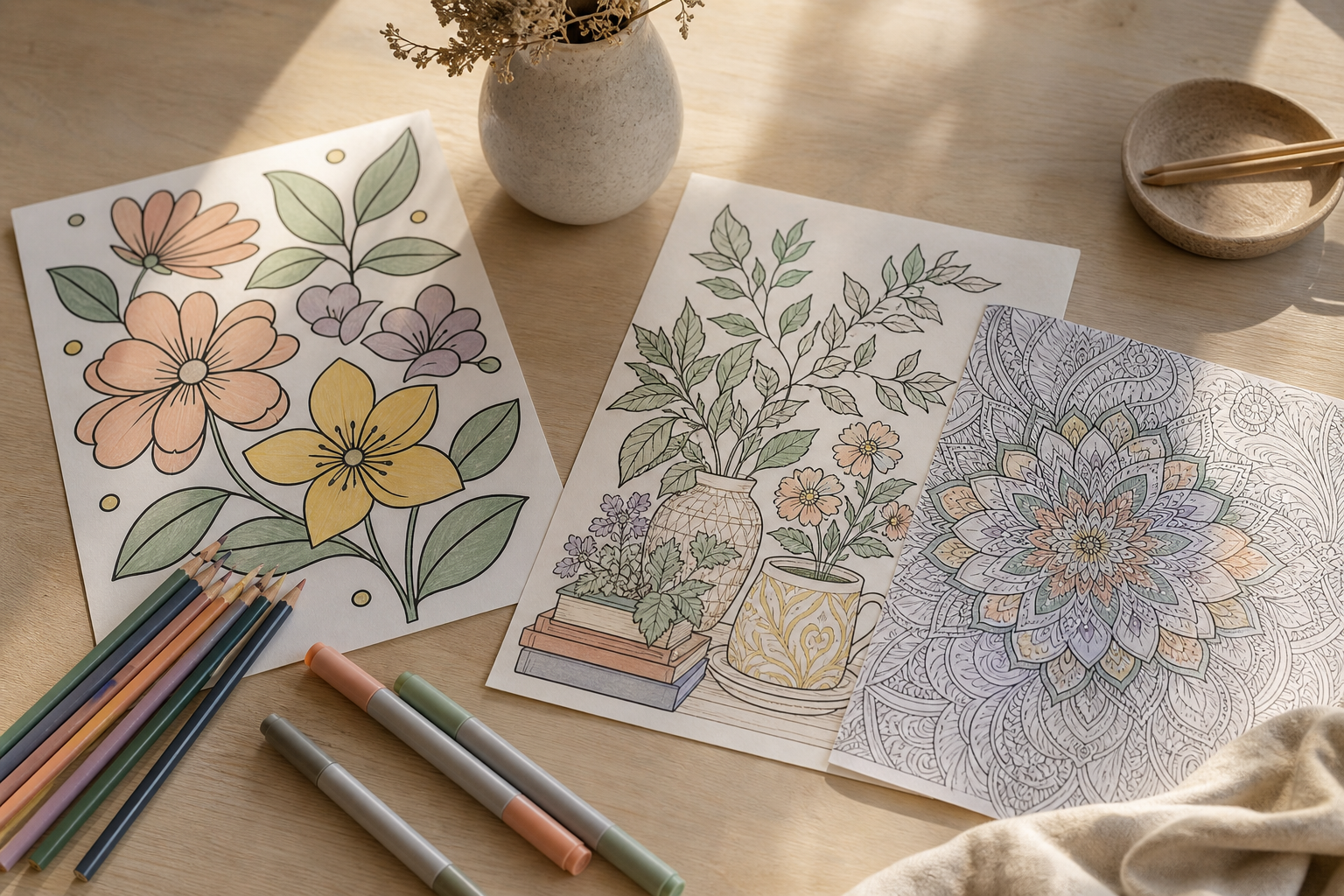
Walk through a bookstore—or browse coloring books online—and many adult coloring books seem to compete on complexity. Tiny flowers, intricate mandalas, hundreds of little spaces, and pages that could take hours to complete.
For some people, that is exactly the appeal. For others, it turns something that was supposed to feel relaxing into another project requiring concentration and patience.
A coloring book does not need to be complicated to be made for adults. Bold-and-easy books, with clearer outlines and larger coloring spaces, offer a different experience—one that may suit someone who wants a simpler creative break.
The better question is not which coloring book has the most impressive artwork. It is which pages you will actually want to color.
Start with the level of detail you actually enjoy
Adult coloring books cover a wide range of experiences. At one end are intricate pages with tiny spaces, elaborate patterns, detailed mandalas, and complex botanicals designed for longer coloring sessions. At the other are bold-and-easy pages with clearer outlines, larger spaces, simpler compositions, and fewer tiny details.
Between those two ends are books with medium detail: recognizable scenes, a moderate number of coloring areas, and enough variety to feel engaging without becoming overwhelming. None of these formats is more grown-up, sophisticated, or worthwhile than the others. Complexity is a preference, not a measure of quality or maturity.
Some adults genuinely enjoy spending several evenings on one detailed page. Others would rather complete something satisfying during a shorter break. Bold-and-easy coloring is a legitimate adult format for anyone who prefers a lower-pressure pace, is new to coloring, dislikes very small spaces, or wants to finish pages in shorter sessions.
Some older adults and seniors may prefer larger spaces and clearer outlines simply because those pages are more comfortable or enjoyable for them. Others may love highly detailed designs. Age alone does not determine the right coloring style; the person’s preference does.
- intricate pages for slow, detailed coloring
- medium-detail pages for recognizable scenes and variety
- bold-and-easy pages for clearer shapes and a lighter sense of effort
- a format that matches the time and patience you actually want to give it
Choose a theme you’ll still like after page five
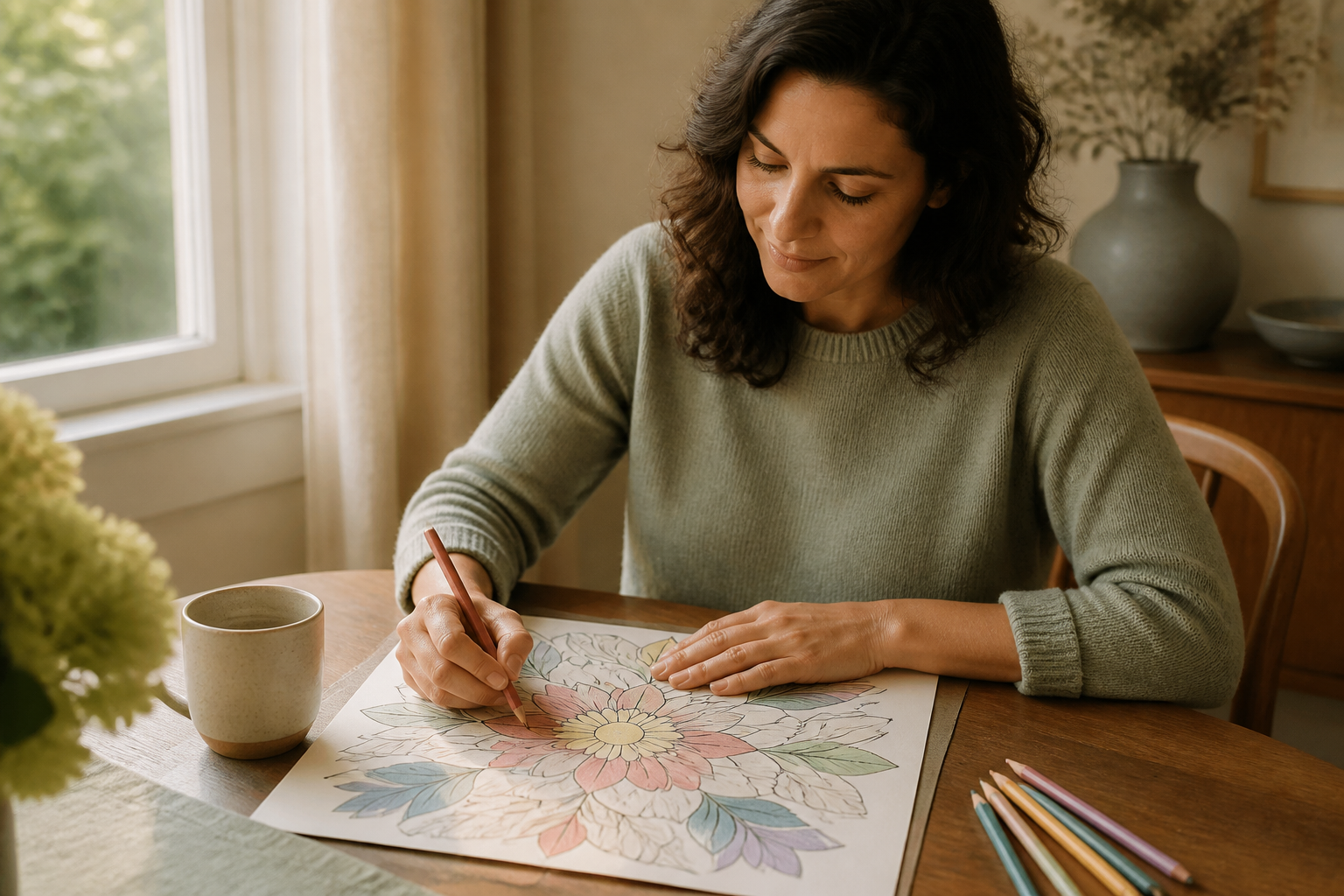
Subject matter has a lot to do with whether a coloring book stays in rotation. Flowers and botanicals, cozy interiors, gardens, animals, landscapes, mandalas, geometric patterns, fantasy, fashion, food, travel, and seasonal scenes can all create very different moods.
A beautiful cover may be what gets your attention, but the interior pages matter more. Ask whether you would enjoy coloring twenty or thirty variations on the theme. Someone who loves plants may be happy with an entire botanical book, while someone else may prefer a collection of varied scenes.
If repetition sounds satisfying, a focused theme may be exactly right. If you want to feel surprised by each page, look for a book with more variety. Neither approach is better; it is a question of what you want the activity to feel like over time.
- look for subjects you naturally return to
- notice whether the book repeats one motif or varies its scenes
- consider whether the theme suits the mood you want while coloring
- let the interior pages—not only the cover—guide the choice
Look at the line style and page layout
People often focus on the illustration and overlook how the page is constructed. Bold outlines can make shapes feel clearer, while fine lines may suit someone who enjoys working slowly through small details. Open compositions can feel easier to scan than a page filled edge to edge.
Margins, binding, and printing format also affect the experience. Artwork that runs close to the binding may be awkward to reach. Full-page designs feel different from centered designs with breathing room. One-sided printing may matter to someone using markers, while someone using pencils may be perfectly comfortable with double-sided pages.
These details are not signs of a better or worse book. They simply change how the book behaves with your tools, your hands, and the amount of space you want around the artwork.
- bold or fine outlines
- open or crowded compositions
- large or tiny coloring areas
- comfortable margins and access near the binding
- one-sided or double-sided printing
Match the book to your tools — and your patience
Colored pencils, crayons, gel pens, water-based markers, and alcohol markers each interact with paper and page details differently. Markers may bleed through some papers. Pencils can feel different depending on the paper texture. Gel pens may need a little drying time before a page is closed.
The useful question is not which tool is best. It is which tools you already enjoy reaching for. Fine pencils or pens may feel natural with tiny details, while broader markers or crayons may suit bold-and-easy pages with larger spaces.
Time matters too. Maybe you want a fifteen-minute creative break, one page for an evening, or a detailed project that unfolds over several sessions. Choose a book that fits the experience you want rather than the amount of detail you think you ought to handle.
- match small spaces to tools you can use comfortably
- consider how the paper may behave with markers or wet media
- choose broader spaces when you prefer crayons or broad markers
- let your available time influence the level of complexity
Use sample pages—not just the cover—to decide
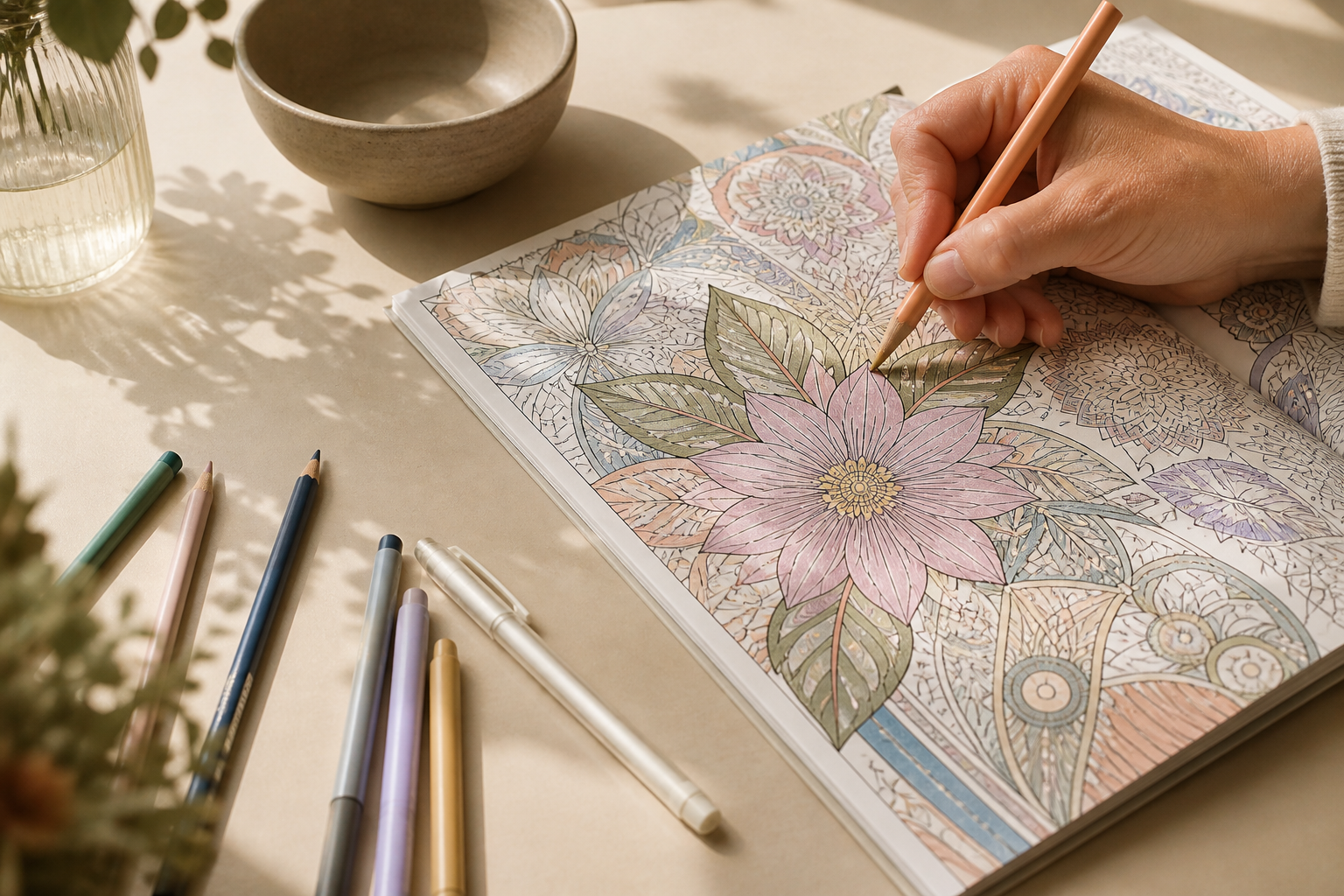
Whenever interior previews or sample pages are legitimately available, they can tell you much more than an elaborate cover. Look for the average level of complexity, line thickness, page variety, repetition, coloring-space size, and how the artwork sits near the binding.
Try to imagine using several pages rather than reacting to one especially beautiful spread. Do the designs make you want to pick up your pencils or markers? Are the spaces comfortable for the tools you like? Is the artwork more detailed than you enjoy, or simpler than you want?
Previews are not always available, but when they are, they are often the most useful part of the decision. The cover can promise a mood; the interior shows you the actual experience.
- Can I imagine coloring several of these pages?
- Are the lines clear enough for my preference?
- Do the pages offer enough variety?
- Do several pages feel almost identical?
- Does looking at the interior make me want to start?
Choose the book you’ll actually want to reopen
There is no universal best adult coloring book. The right choice depends on your preferred complexity, theme, line style, page layout, tools, available time, and desire for variety or repetition.
A highly intricate book can be wonderful for someone who enjoys detailed, slow coloring. A bold-and-easy book can be equally satisfying for someone who wants clear shapes, larger spaces, and a more relaxed pace. The important thing is not to confuse visual complexity with creative value.
Bring the decision back to the simplest test: does this book make you want to pick up your pencils or markers and begin? If the answer is yes, it may be the right fit.
- preferred complexity
- theme and subject matter
- line style and page layout
- coloring tools
- available time
- variety versus repetition
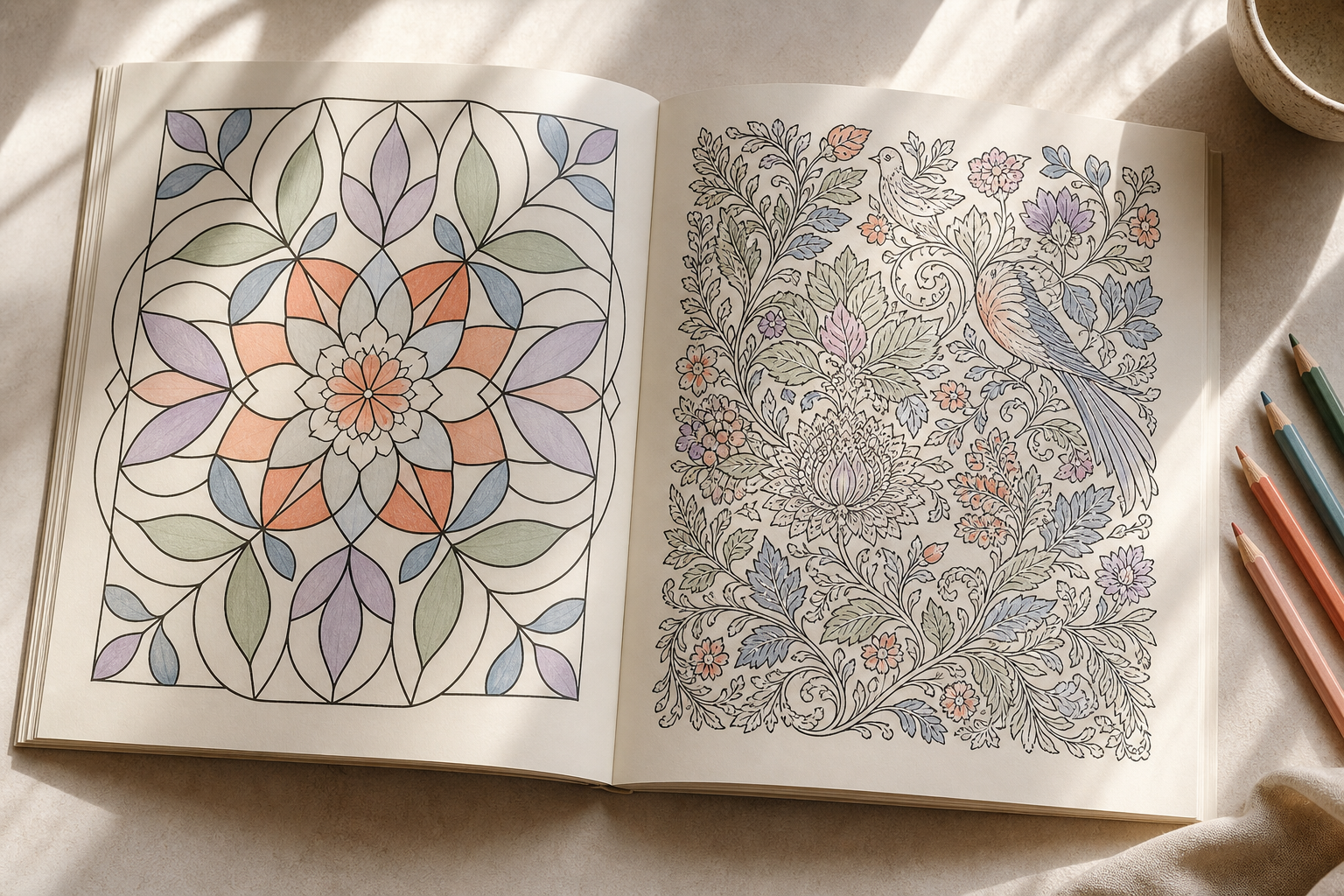
The best coloring book is the one you want to open again
Adult coloring does not have to be complicated to count as creative. Some people relax by disappearing into hundreds of tiny details. Others enjoy the satisfaction of filling larger, clearly defined spaces and completing a page without turning it into a multi-hour project.
The right book should fit your taste, your tools, your patience, your available time, and the kind of creative experience you want.
A coloring book can look beautiful on a shelf and still be the wrong book for you. The better choice is the one whose pages make you want to start coloring.
- Will I enjoy this level of detail?
- Do I like the theme enough to return to it?
- Will the page layout suit the tools I use?
- Do the interior pages make me want to start coloring?