
Many people imagine a reading corner as something elaborate: built-in shelves, a window seat, a dedicated library, or a perfectly styled room. But a useful reading corner can be much simpler.
Sometimes all it needs is somewhere comfortable to sit, enough light to read, somewhere to put a book or drink, a few books within reach, and small details that make staying there pleasant.
The purpose is not to create another decorative corner that looks good but never gets used. It is to create a small place that quietly makes reading easier to choose.
That place might be in a bedroom, living room, shared space, unused corner, or beside a window. The most successful version is the one that fits the home and the way someone actually lives in it.
Here are eleven thoughtful places to begin.
Start with the right little corner
Begin with the space itself. A reading corner might fit into a bedroom corner, living-room corner, beside a window, along an unused wall, on a landing, at the end of a hallway, beside a bookshelf, or in a small section of a multipurpose room.
Notice the practical conditions before the visual ones. Is there natural light? How much traffic passes through? Is the spot noisy? Is there enough floor space, and is a nearby outlet useful? Will the chair block a doorway or walkway?
The best corner is not necessarily the prettiest one. It is the one someone is likely to use. A slightly ordinary spot that feels reasonably separate from household activity may serve better than the most photogenic corner in the home.
Choose a chair you genuinely want to sit in
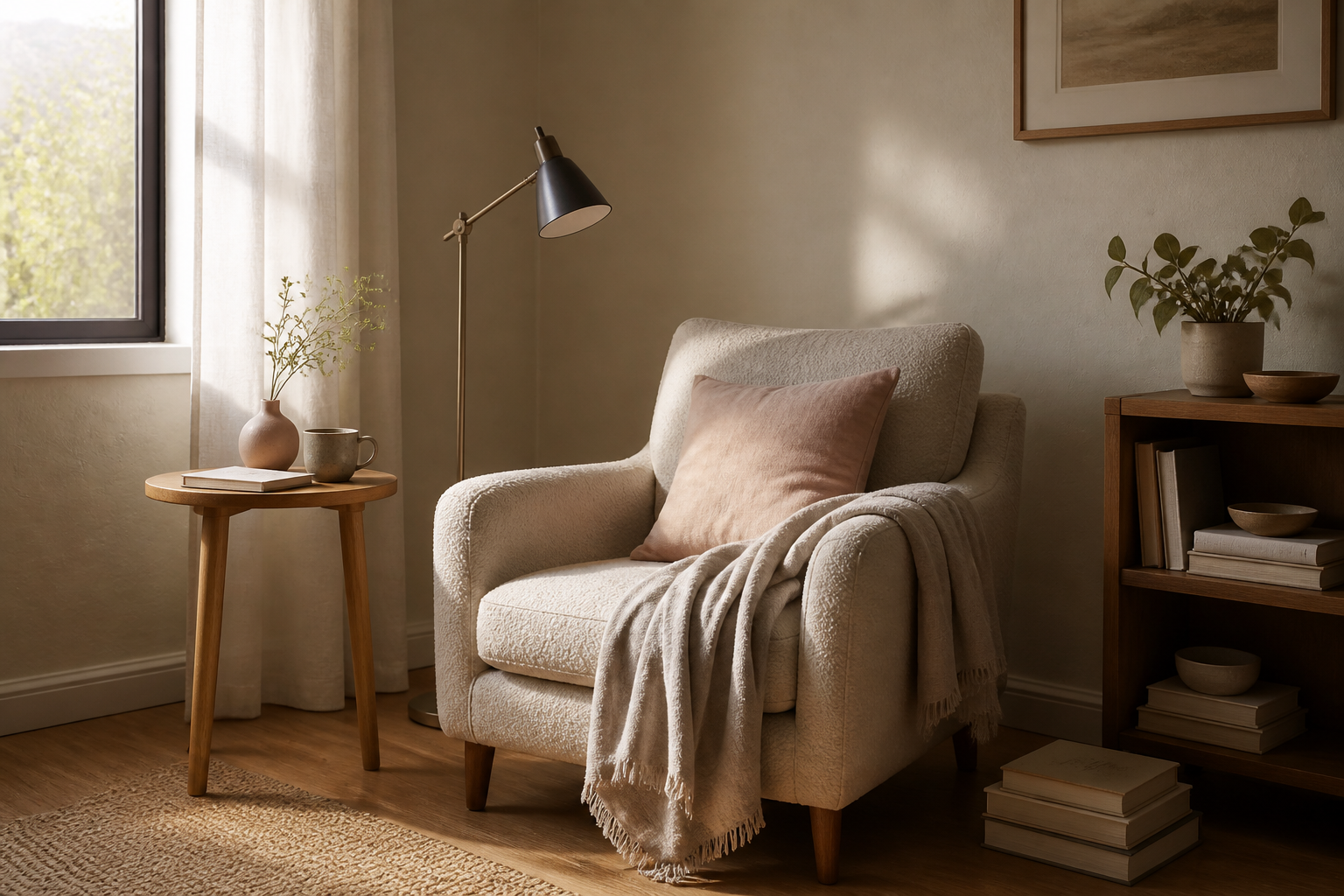
Comfort is the center of the arrangement. The seat might be an armchair, accent chair, compact recliner, chaise, floor chair, cushioned bench, or an existing chair that already belongs in the room.
Pay attention to seat depth, back support, armrests, room to shift position, and whether your feet can rest comfortably. Scale matters too: a chair that overwhelms a small room may make the corner feel harder to use, while one that is too slight may not feel inviting.
The chair does not need to match a particular aesthetic. A beautiful chair that nobody wants to sit in is not a successful reading chair. Choose the one that makes staying feel natural.

Give yourself somewhere to put a book and a drink
A reading corner usually works better when there is a small surface within reach. That might be a side table, C-table, stool, narrow pedestal table, floating shelf, wall-mounted ledge, existing nightstand, or small nesting table.
Leave enough room for the current book, a cup or glass, reading glasses, a phone if needed, and a bookmark. The surface does not need to be large; it needs to be available. In a tiny space, a wall-mounted ledge or slim table can keep the footprint light without making the chair less useful.
Avoid encouraging clutter. A little open space makes it easier to set something down and easier to reset the corner when you are finished.
Get the lighting right for reading
Reading light has a more specific job than simply making a room feel bright. Natural daylight can be lovely, while direct sun may create glare or make the page uncomfortable to position. In the evening, a floor lamp, adjustable reading lamp, wall-mounted light, or small directional lamp can give the reader more control.
Good reading light should reach the page without shining directly into your eyes or creating distracting reflections. An adjustable direction, an easy-to-reach switch, and a brightness level that suits your preference are often more useful than a dramatic fixture.
Keep the lamp’s footprint in proportion to the space. A compact directional lamp beside the chair may be more practical than a large piece that takes over the table or walkway. Warm or cooler light is largely a matter of preference; choose what feels comfortable in the room.
- notice where daylight falls before positioning the chair
- aim the light toward the page rather than only the room
- choose an adjustable head or arm when the setup needs flexibility
- keep the switch easy to reach
- avoid placing a lamp where its cord becomes a trip hazard
Add softness without overcrowding the space
A few soft elements can make a corner feel more inviting: a throw blanket, one or two cushions, a small rug, a nearby curtain, or an upholstered footstool.
Restraint matters. The chair should still be easy to sit in without moving a pile of decorative cushions first. Choose details that support comfort and warmth rather than styling the space for a photograph.
If the room is already visually full, one good textile may do more than several smaller accents. Leave the arrangement enough breathing room to feel like part of the home, not a display that needs to be protected.
Keep your next reads within reach
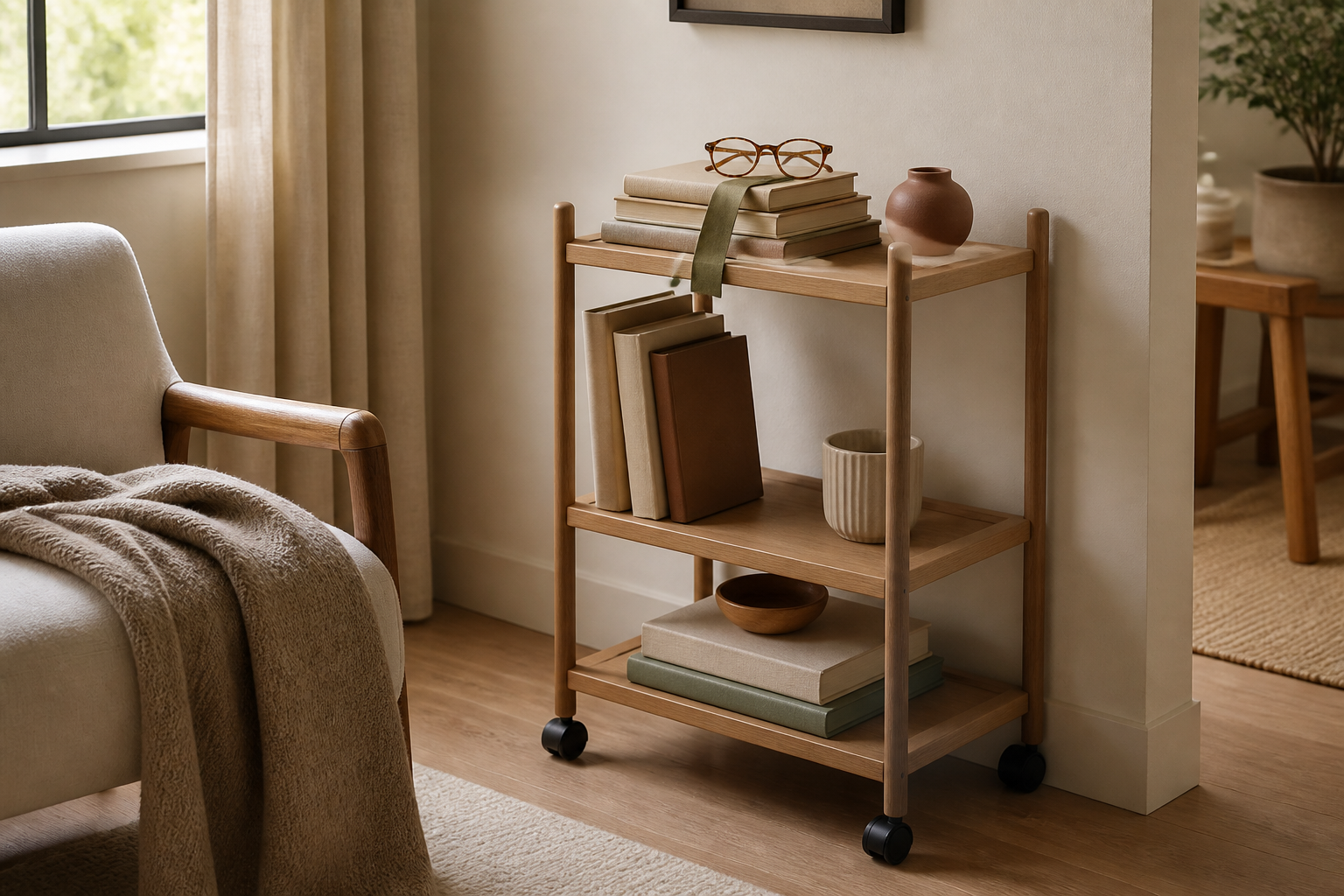
Books are easier to return to when they are visible and close by. A small bookshelf, narrow bookcase, floating shelf, basket, side-table shelf, modest stack, or rolling book cart can hold the current read and the next few books without needing to contain an entire collection.
A rolling book cart is especially flexible in a small or multipurpose space. It can hold a few books, a journal, and reading accessories, then move when the room needs to change roles. The point is not to create a miniature library. It is to make the next book easy to see and easy to pick up.
Keeping a book within reach can reduce the small friction of deciding what to read next, without turning the corner into another storage project.
Create a little separation from the rest of the room
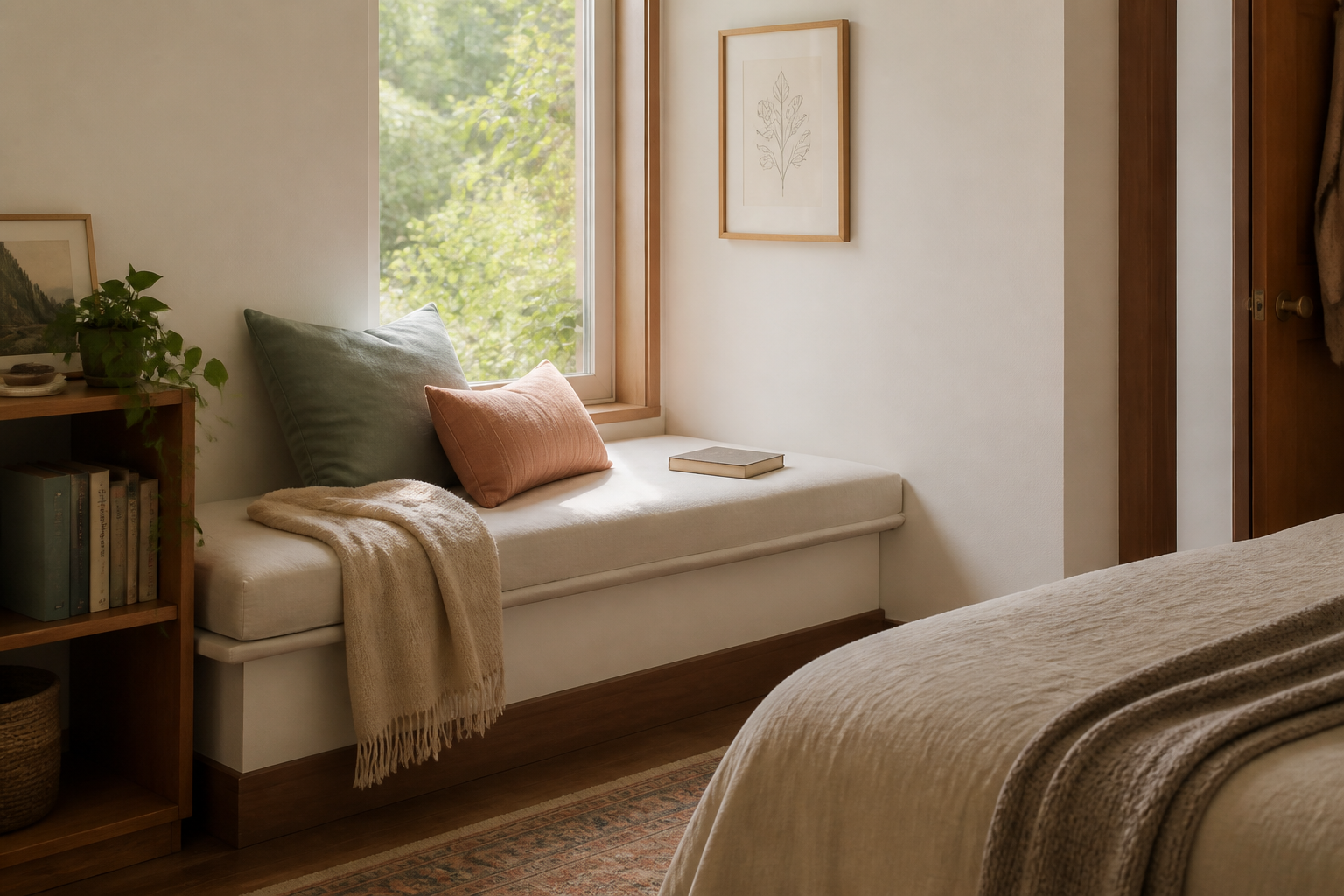
A reading corner can feel distinct even without walls. A small rug, a deliberate chair orientation, a floor lamp, a side table, a bookshelf, a plant, artwork, a different wall treatment, or a position near a window can give the eye a subtle signal that this corner has a particular purpose.
The goal is not to isolate the space completely. It is simply to make the arrangement feel intentional. In a shared room, the chair can face slightly away from the busiest path. In a bedroom, a lamp and small table may be enough to create a quiet edge beside the bed.
Small visual boundaries often work better than unnecessary renovation. Let the corner belong to the room while still giving it a little identity of its own.
Give the little reading things a home
Reading often comes with a few small companions: glasses, bookmarks, a journal, pens, tissues, headphones, a charger, lip balm, tea accessories, or a book light. When these things have no obvious place, the side table can become crowded quickly.
One small basket, drawer, side-table compartment, tray, or pouch is usually enough. The aim is not to organize every object separately. It is to keep useful things easy to find while keeping the main surface calm.
Choose the simplest container that fits the corner and the way you use it. If returning something takes too many steps, the system is probably more elaborate than it needs to be.
Make the corner comfortable through the seasons
A corner near a window may feel very different in January than it does in July. Small adjustments can help it remain pleasant without requiring a seasonal redesign.
In cooler months, a throw blanket, warmer lighting, a rug, and slightly heavier textiles may make the chair more inviting. In warmer months, a breathable throw or cushion, nearby airflow, and lighter fabrics can be enough. A small fan may be useful where appropriate, while direct afternoon sun may make another spot more comfortable.
Think about how the light, temperature, and fabrics change across the year. The best location is one that remains usable through ordinary shifts in the room.
Make it somewhere you actually use
A reading corner can become too styled, too precious, or too inconvenient. Keep the current book visible. Leave the blanket accessible. Make the lamp easy to switch on. Keep the side table clear enough to use, and avoid storing unrelated clutter in the chair or beside it.
If someone has to move five pillows, clear the seat, find the lamp cord, and retrieve a book from another room, the corner is less likely to be used. A useful reading space should make beginning easy.
Small choices that reduce friction matter more than a perfectly coordinated arrangement. Let the corner look lived in enough that sitting down feels like an ordinary option.
The best reading corner is the one that draws you back
The most inviting reading space is rarely the one that asks the most of you. It is the one that fits into the life already happening around it and makes a few good things easy to reach.
- Where in my home do I naturally want to slow down?
- Is there enough light to read comfortably?
- Is the seat somewhere I genuinely want to stay?
- Can I reach my current book easily?
- Is there somewhere to put a drink?
- Does the space feel inviting rather than staged?
- What small change would make sitting down easier?
The best reading corner is not necessarily the most beautiful one.
It is the one you keep finding yourself returning to.