
Some of the most useful things we own are not dramatic. They do not completely transform a room or change the way we live overnight.
They simply remove a little friction.
A light turns on when your hands are full. A charging area stops looking tangled. A drawer finally becomes easy to use. A quick cleanup no longer means dragging out a full-size vacuum.
That is the kind of everyday usefulness we look for at Found for You: small improvements that make routines feel smoother, spaces work better, and ordinary tasks take a little less effort.
Here are nine types of finds worth considering.
Motion-sensor lighting for the places that are always too dark
Some spaces are awkwardly lit no matter how many lamps you own.
Think closets, under cabinets, hallways, stair areas, pantries, laundry spaces, or the inside of a deep storage cabinet.
A simple motion-sensor light can make these areas much easier to use without requiring you to flip a switch every time.
When choosing one, look for practical features such as:
- easy installation
- rechargeable or replaceable battery options
- adjustable brightness
- a sensor range appropriate for the space
- a design that does not feel bulky or intrusive
The goal is not to add more technology for the sake of it. It is simply to make a dark corner more useful.
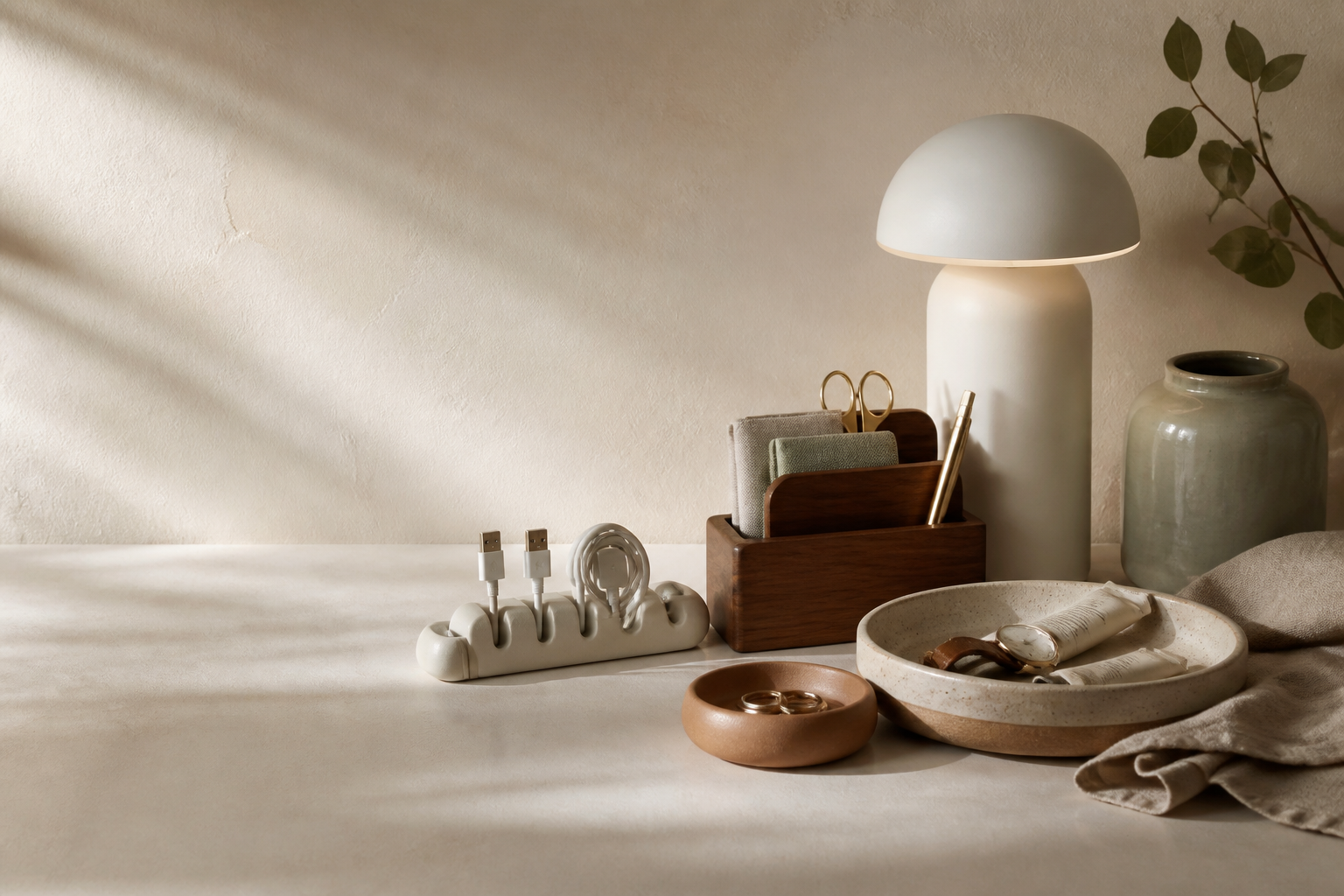
Cable organizers that make charging areas feel calmer
Charging cables have a way of spreading.
Phones, tablets, earbuds, watches, laptops, and other devices can quickly turn one corner of a desk or nightstand into a tangle.
Cable clips, sleeves, trays, or compact organizers can help keep frequently used cords where you actually need them.
A good solution should make cables easier to access, not harder.
Before choosing one, think about:
- how many cables you regularly use
- whether you need to move them often
- whether the organizer will sit on a desk, wall, nightstand, or floor
- whether the adhesive or mounting method works for your surface
The best setup is usually the one you barely notice.
Drawer organizers that make small spaces work harder
A drawer can technically hold a lot while still being frustrating to use.
Utensils, office supplies, cosmetics, craft materials, kitchen tools, and miscellaneous household items are much easier to manage when they have some structure.
Adjustable dividers and modular trays can be especially useful because the layout can be changed as your needs change.
Instead of looking for the most elaborate system, pay attention to:
- the inside dimensions of the drawer
- the types of items you actually store there
- whether sections can be resized
- whether the organizer is easy to clean
An organizer is only useful if it matches the way you naturally use the space.
A compact handheld vacuum for the messes that do not justify a full cleanup
Not every spill needs a full-size vacuum.
Crumbs under the table, a messy car seat, dust in a drawer, debris around a desk, or a small patch of pet hair can often be handled much faster with something compact.
A handheld vacuum can be useful precisely because it reduces the effort required to start cleaning.
Things worth considering include:
- comfortable weight
- easy emptying
- useful attachments
- simple charging or storage
- whether the size works for the places you intend to use it
The point is convenience. If it is difficult to access, charge, or clean, it may not actually make life easier.
A rotating organizer for frequently reached-for items
A rotating organizer can be surprisingly useful in spaces where items tend to disappear behind one another.
They can work well in:
- pantry shelves
- bathroom cabinets
- kitchen counters
- craft spaces
- cleaning-supply cabinets
The advantage is simple: you can reach what is at the back without pulling everything out first.
Before buying one, measure carefully. Height and diameter matter, especially inside cabinets.
Also consider whether you need raised edges to keep smaller items secure.
This is one of those simple ideas that works best when used in the right place rather than everywhere.
A label maker for storage that actually stays organized
Labels are not only about making containers look neat.
They can reduce the small decisions involved in putting things away.
If everyone knows where batteries, cables, craft supplies, seasonal items, documents, or pantry ingredients belong, maintaining the system becomes easier.
A compact label maker can be useful for:
- storage bins
- pantry containers
- file folders
- cords
- drawers
- kids' supplies
- home-office organization
Look for something simple enough that you will actually use it.
An organization system that requires too much effort to maintain usually does not last.
Smart plugs or timers for routines you repeat every day
Not every household device needs to become “smart.”
But there are repetitive routines where a plug or timer can be genuinely useful.
For example, automatically turning a lamp on in the evening or switching something off at a set time can remove one small task from your day.
The most useful setups tend to be simple.
Before choosing a smart plug or timer, consider:
- what device you are connecting
- whether the plug is suitable for that device
- whether you prefer app control, a physical timer, or both
- whether the product works with your existing home setup
The goal should be convenience, not creating another complicated system to manage.
A small catchall for the things that otherwise wander around the house
Keys. Sunglasses. Earbuds. Loose change. Hair ties. Receipts.
Small items often create disproportionate clutter simply because they do not have an obvious place to go.
A tray, shallow bowl, small divided container, or entryway catchall gives those objects a landing place.
Good locations include:
- near the front door
- on a bedside table
- beside a desk
- near a charging station
- on a dresser
This is less about buying a particular type of container and more about creating a reliable habit: frequently used small items should have an easy place to return to.
A charging station that gives frequently used devices one home
When several devices are charged in different places, it becomes easy to lose track of cables, adapters, or where something was left.
A compact charging station can create one predictable place for frequently used devices.
Depending on your household, that might include:
- phones
- earbuds
- watches
- tablets
- portable chargers
The best charging setup is not necessarily the one that handles the most devices.
Look for:
- compatibility with what you actually own
- enough space between devices
- simple cable management
- appropriate power requirements
- a footprint that works for your surface
Keeping the setup simple usually makes it more useful.
The common thread: less friction
A useful find does not need to solve a major problem.
Sometimes the value is simply that it removes one recurring annoyance.
When deciding whether something is worth bringing into your home, ask:
- Does this solve a problem I actually have?
- Will I use it often enough to justify the space it takes up?
- Is it simpler than the system I already have?
- Will it be easy to maintain?
- Does it make an everyday task noticeably easier?
There are endless products designed to look useful. The better finds are the ones that quietly earn their place by making everyday life work a little more smoothly.
That is the kind of thing we are always looking for.