
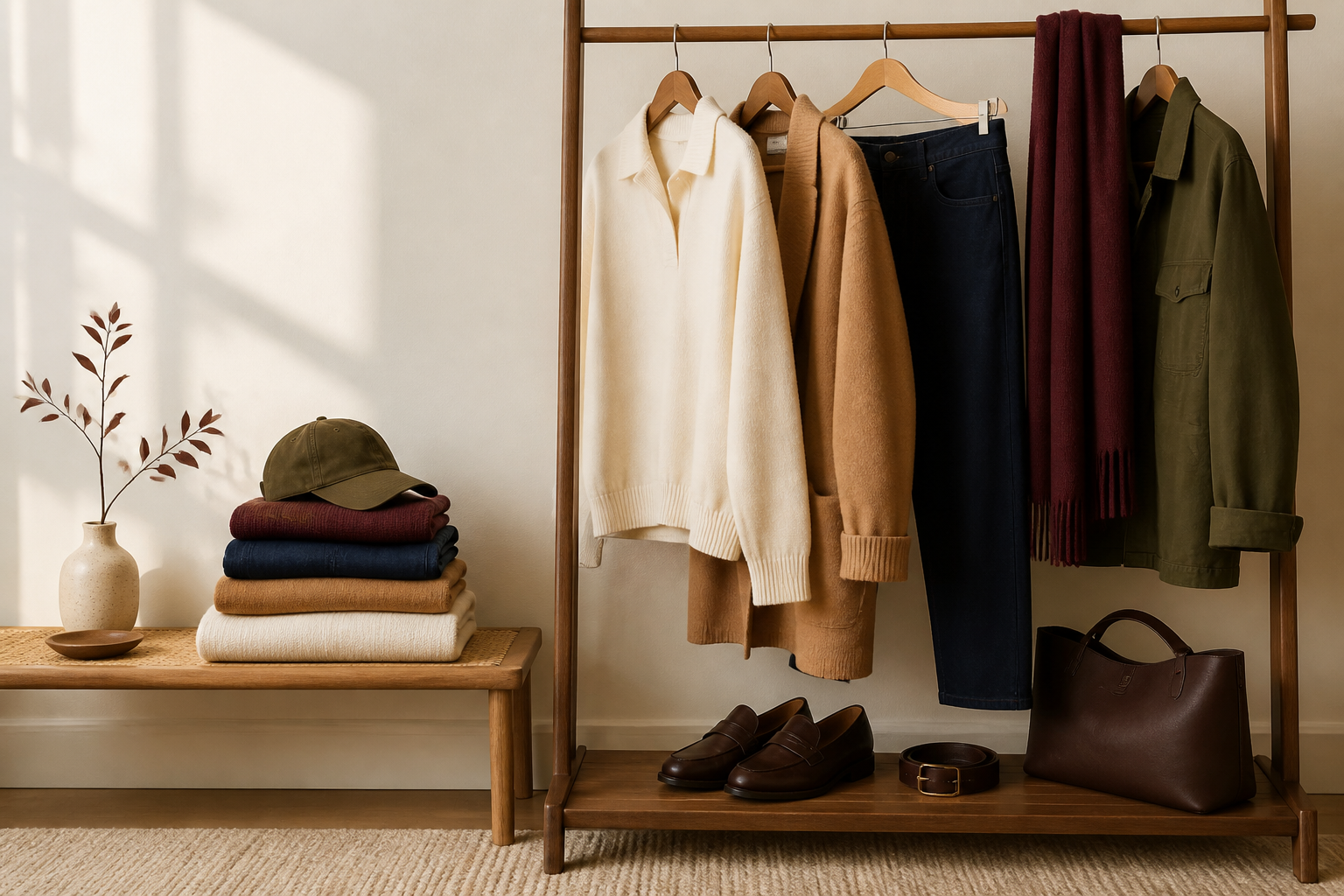
Getting dressed can become harder when every item feels like a separate decision. Color is often the part that makes an otherwise simple outfit feel connected—or makes it feel busier than intended.
Matching clothing colors does not have to mean following strict rules. A few reliable combinations can make getting dressed easier while still leaving room for personal style.
You do not need a large wardrobe or a perfect understanding of color theory. Start with what you already like wearing, then notice which colors make familiar pieces feel easier to combine.
Start with one neutral base
A neutral gives an outfit a stable place to begin. Black, navy, cream, white, camel, gray, and denim can all play that role, depending on what you already wear and what feels natural to you.
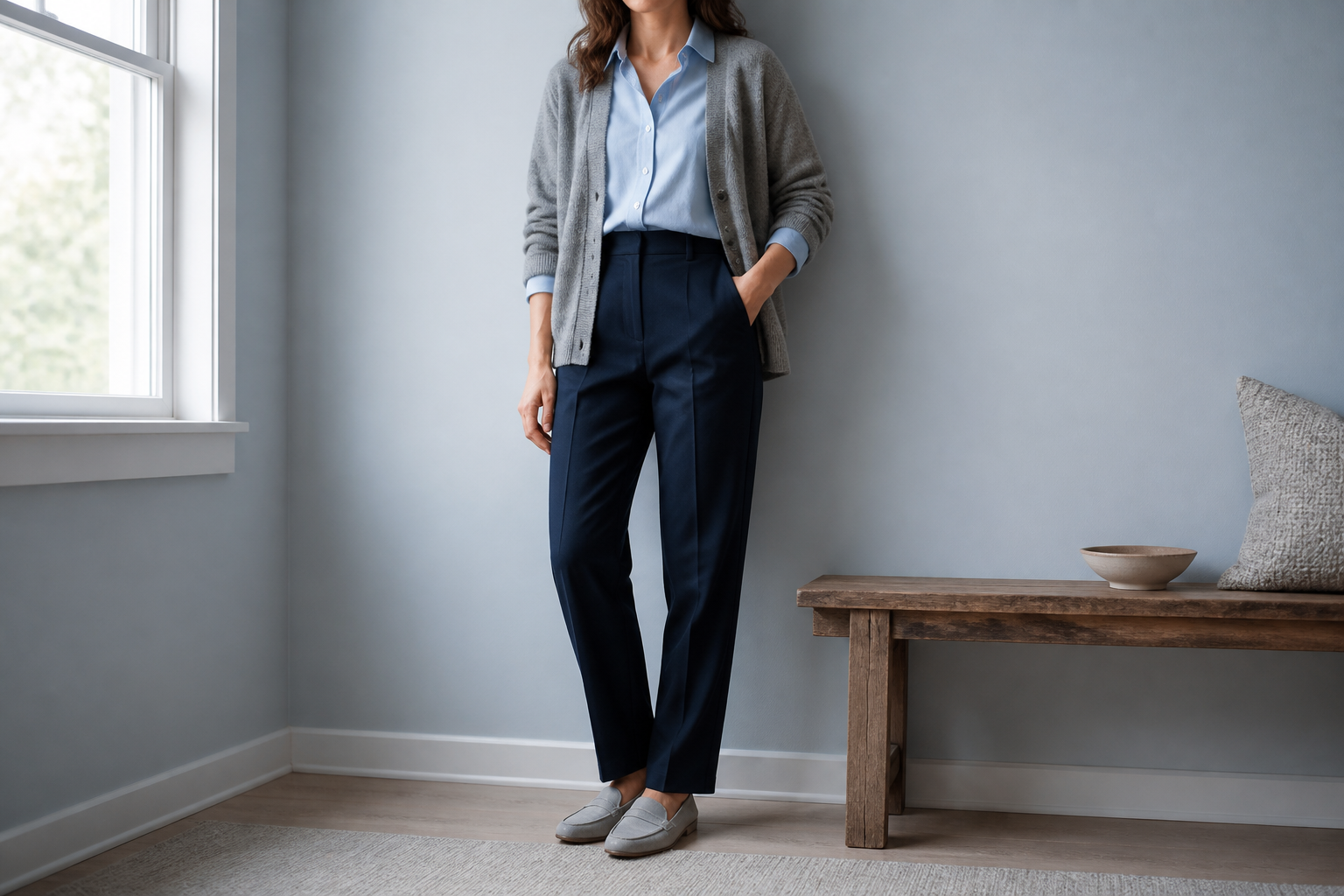
This does not mean the rest of the outfit needs to stay neutral. A cream top can support burgundy or olive. Navy trousers can make a soft blue shirt feel easy. Denim can sit comfortably beside rust, camel, or a muted red.
Think of the neutral as a bridge, not a restriction. It gives a stronger color somewhere to land and makes it easier to use pieces in more than one combination.
Pair colors with a similar warmth
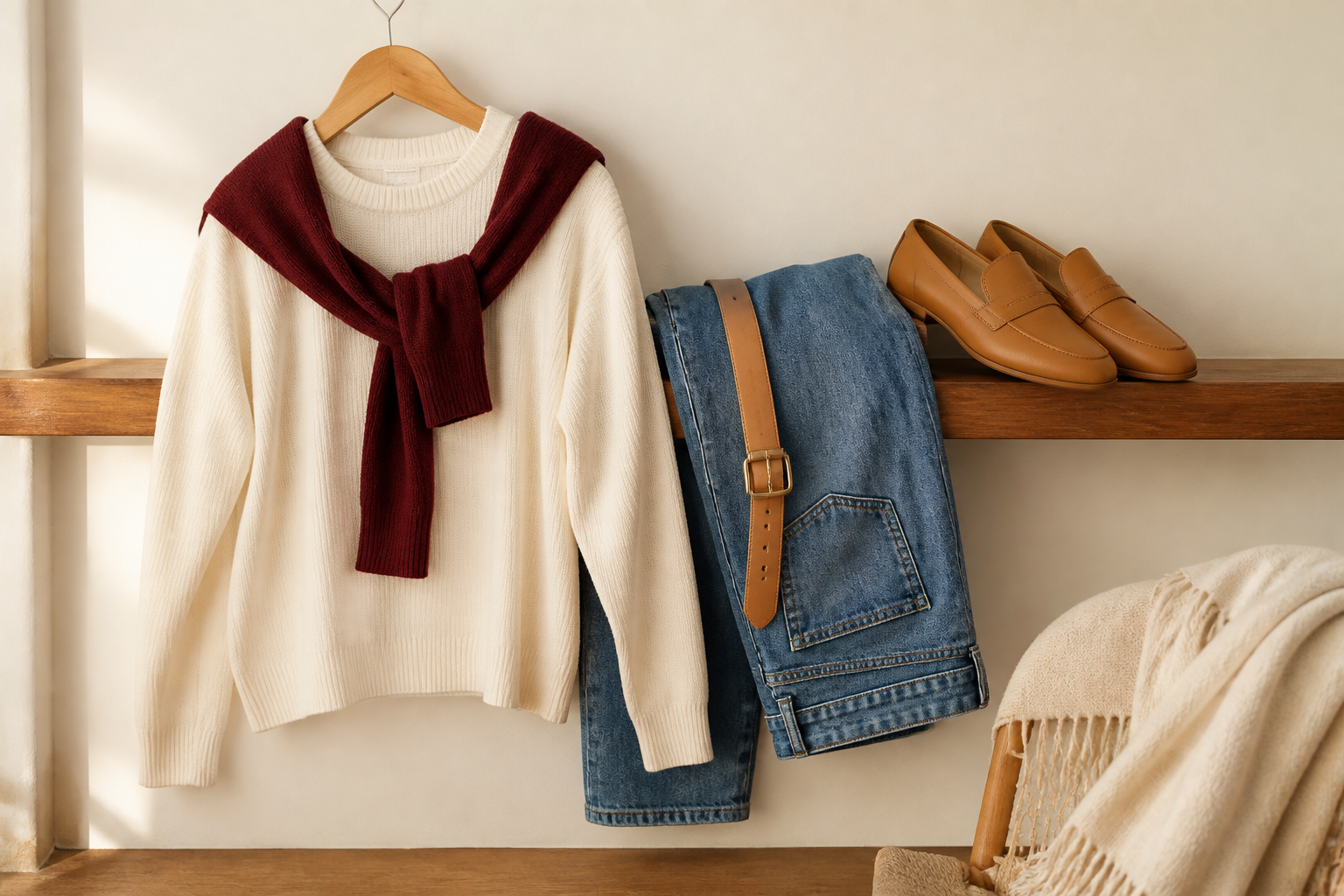
One simple way to begin combining colors is to notice whether they feel warm or cool. Warm shades often sit naturally together, as do cooler shades, because their overall mood feels related.
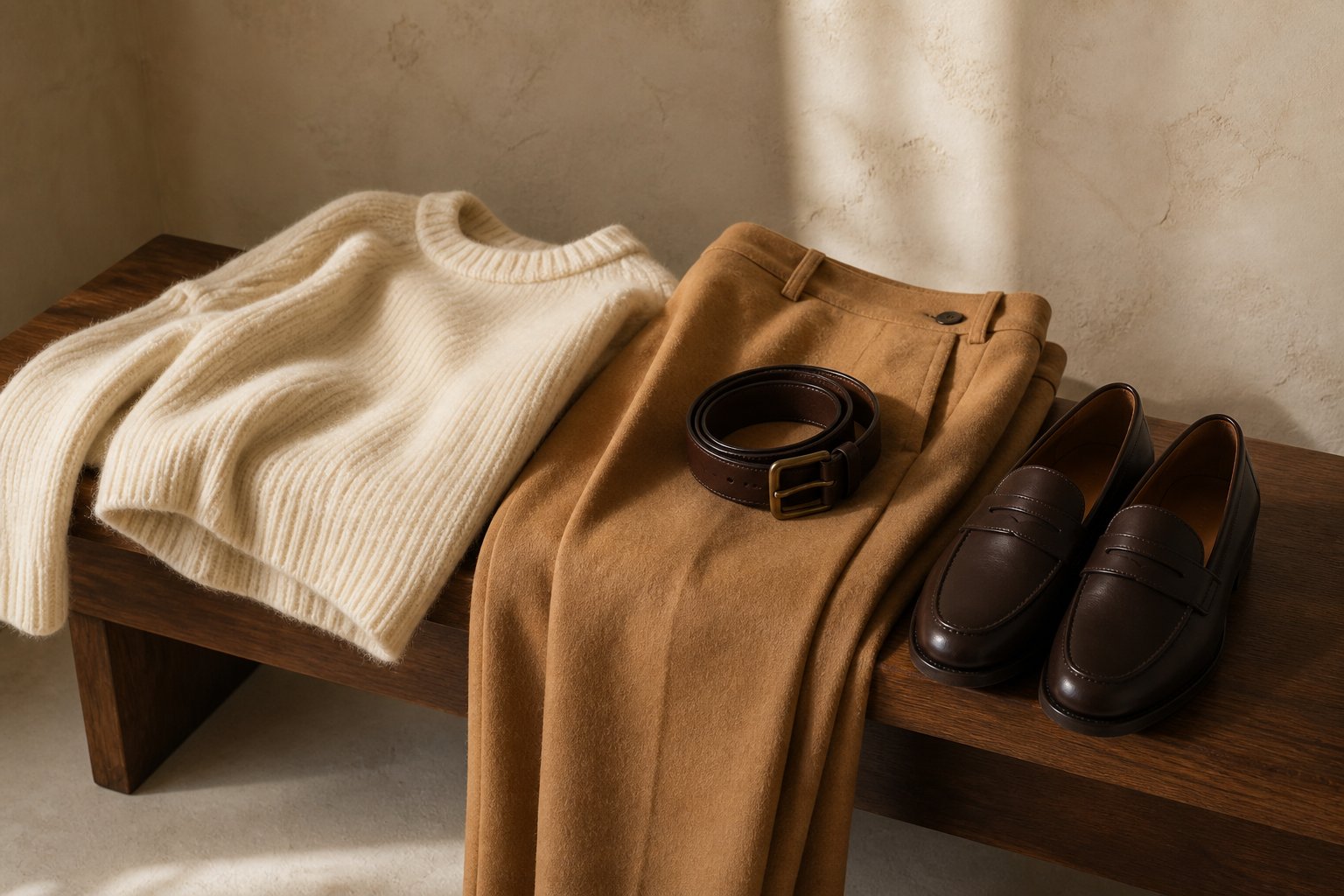
Try camel with cream and chocolate brown, olive with beige, navy with soft blue, or charcoal with a cool blush. These are starting points rather than technical rules, and the exact shade can change the effect.
Mixed warm and cool combinations can work beautifully too. A warm camel coat with a cool blue shirt, for example, can feel balanced when one shade is allowed to lead and the other is used more quietly.
Use one richer color as the accent
A mostly neutral outfit can feel more intentional with one color that has a little more depth. Burgundy, rust, forest green, deep red, and muted blue can all add interest without taking over.
Try burgundy with navy or cream, rust with denim or beige, forest green with camel, or deep red with gray. The accent might be a cardigan, scarf, shoe, bag, or another layer rather than the largest piece in the outfit.
If the color feels strong, repeat a small amount of it elsewhere or let the rest of the outfit stay quiet. The aim is not to make the accent dramatic; it is to give the combination a clear point of view.
Balance light and dark tones
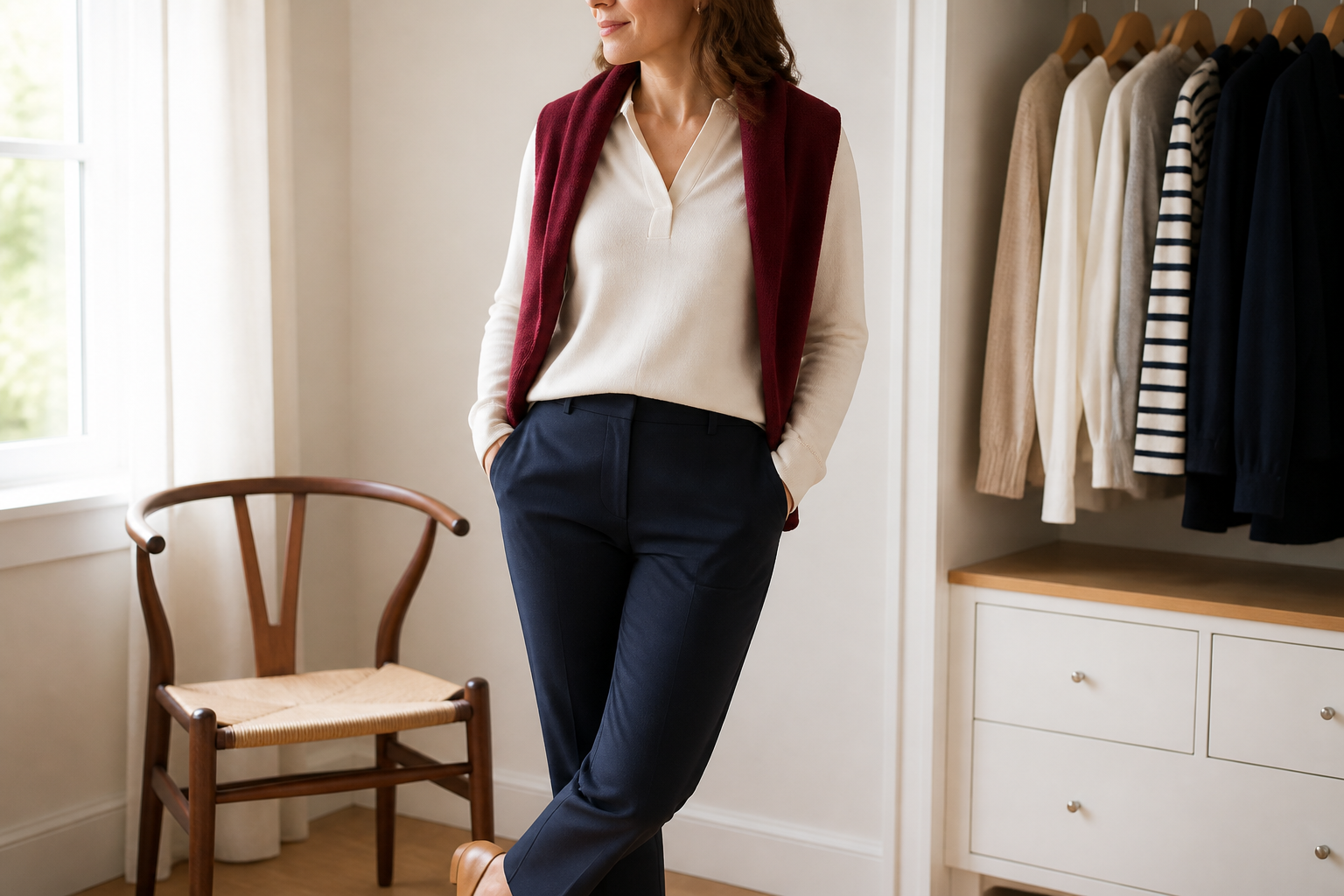
Contrast can help an outfit feel visually balanced. Darker trousers with a lighter top, a dark jacket over a softer base, or a lighter shoe with a deeper outfit can each create a different sense of weight.
This is not advice about what any body type should wear. It is simply a way to notice where the eye goes and how the colors relate across the outfit. You may prefer a high-contrast combination one day and a softer tonal one the next.
When an outfit feels too heavy, try adding one lighter piece. When it feels washed out, a darker layer or accessory may give it more definition. Small changes are enough to test the balance.
Repeat a color somewhere else in the outfit
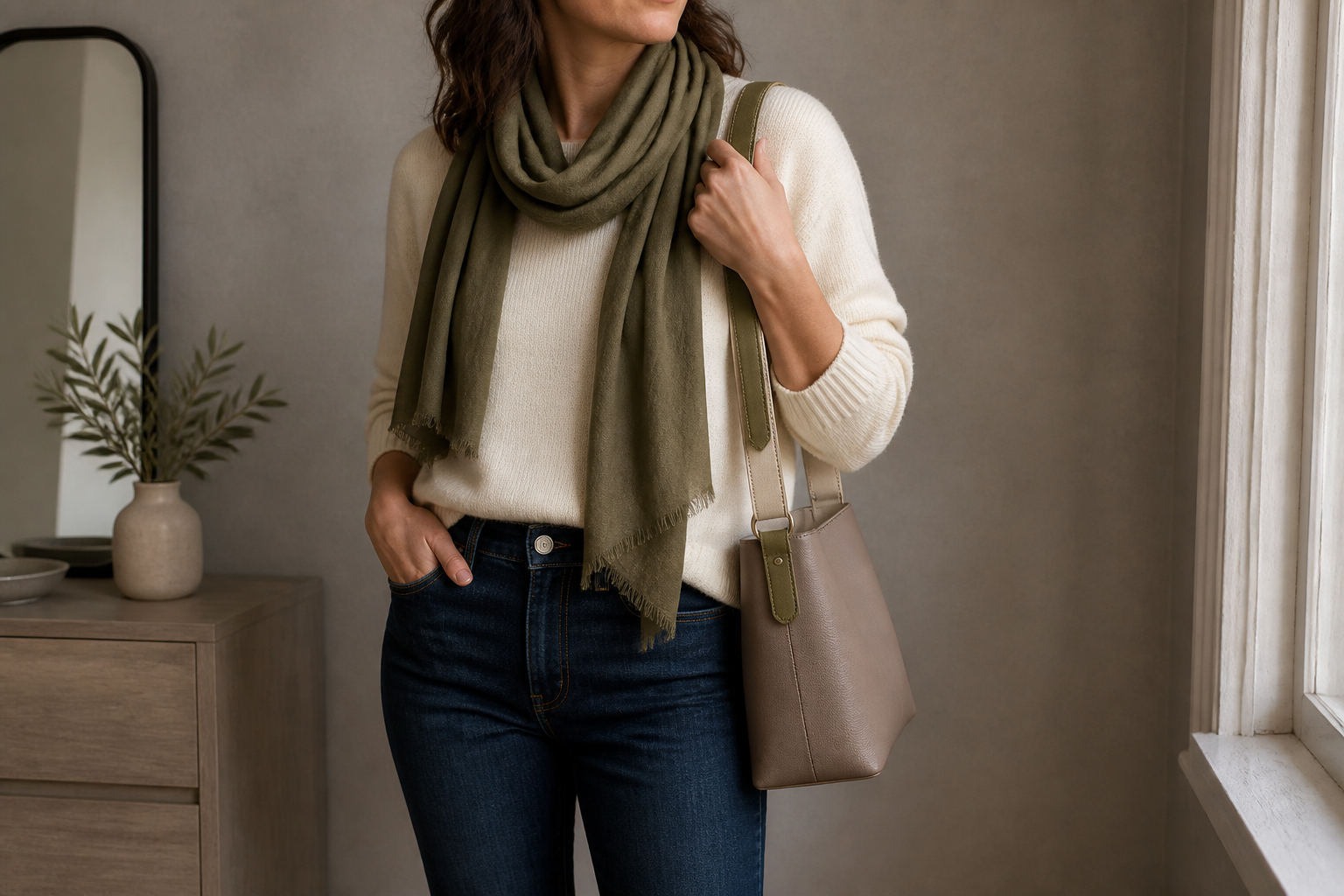
A subtle repeat can make separate pieces feel like they belong together. Pick up the color of a scarf in the shoes, echo a bag in a belt, or let a small jewelry detail relate to a layer without matching it exactly.
Repetition works best when it is easy to miss at first. A muted olive scarf and an olive detail on a bag can feel connected without looking like a set. The same is true of burgundy socks with a deeper cardigan or a tan belt with a camel jacket.
Do not feel obligated to repeat every color. One small connection is often enough, and leaving some colors unpaired keeps the outfit from feeling overly arranged.
Keep a few reliable color formulas in mind
A few combinations can be useful on mornings when you do not want to think too hard. Keep them as starting points, then adjust the shades, textures, and proportions to fit your wardrobe and the day.
- cream + camel + chocolate brown
- burgundy + navy
- olive + beige + black
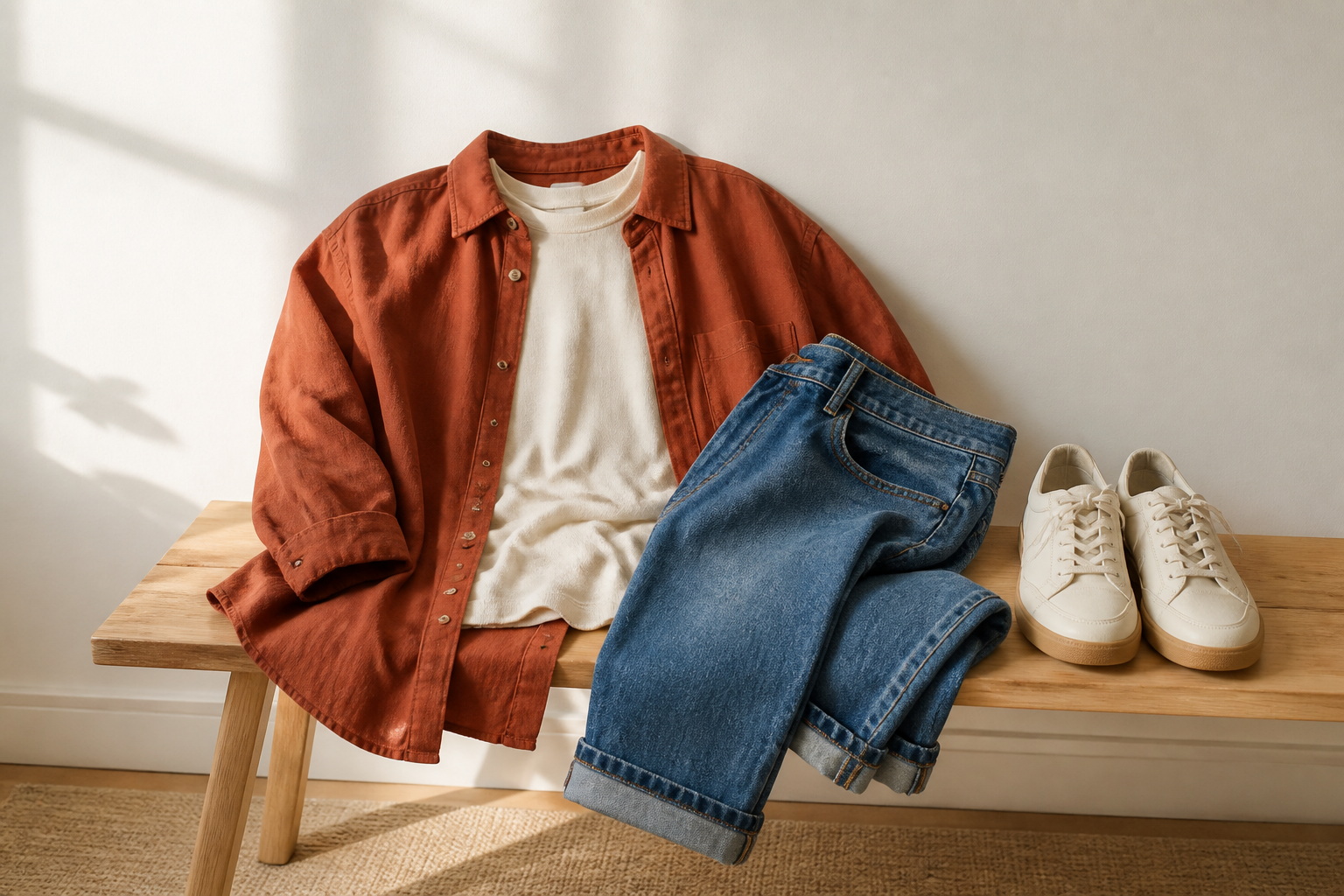
- rust + cream + denim
- charcoal + blush
- chocolate brown + soft blue
- navy + white + tan
- black + camel + cream
You can use one combination as written, swap in a nearby shade, or let one color appear only in an accessory. The value is having an easy place to begin, not following a formula perfectly.
Let color make getting dressed easier
Color can give an outfit structure without making personal style feel complicated. Start with a neutral, notice the warmth of the shades you are combining, add one richer accent when you want it, and use contrast or repetition to connect the pieces.
The most useful combinations are the ones you can actually imagine wearing. Keep the formulas that make your wardrobe easier to use, and leave the rest behind.